King Size Bed Dimensions: The Complete Guide to Every Mattress Size
A king size bed measures 76 inches wide by 80 inches long (193 cm x 203 cm). For comparison: a queen is 60 x 80 inches, a full/double is 54 x 75 inches, and a twin is 38 x 75 inches. A king is 16 inches wider than a queen but the same length — giving two people about 38 inches of personal space each, close to a full mattress’s width per person.
| Size | Width | Length |
|---|---|---|
| Twin | 38 in (96.5 cm) | 75 in (190.5 cm) |
| Twin XL | 38 in (96.5 cm) | 80 in (203 cm) |
| Full / Double | 54 in (137 cm) | 75 in (190.5 cm) |
| Queen | 60 in (152.5 cm) | 80 in (203 cm) |
| King | 76 in (193 cm) | 80 in (203 cm) |
| California King | 72 in (183 cm) | 84 in (213 cm) |
Buying a new bed always sounds simple until you actually start measuring your bedroom, standing in a mattress showroom, or scrolling through bedding listings that all claim to fit “queen” or “king” but somehow mean slightly different things depending on the brand. The truth is that bed sizing in the US follows a fairly standard set of measurements, but the confusion around terms like full vs. double, or exactly how many inches wider a king is than a queen, trips up almost everyone at some point.
Twin Bed Size
This guide breaks down every standard mattress size — twin, full, queen, and king — in inches, feet, and centimeters, explains how they compare to each other, and helps you figure out which one actually fits your room, your budget, and how you sleep.
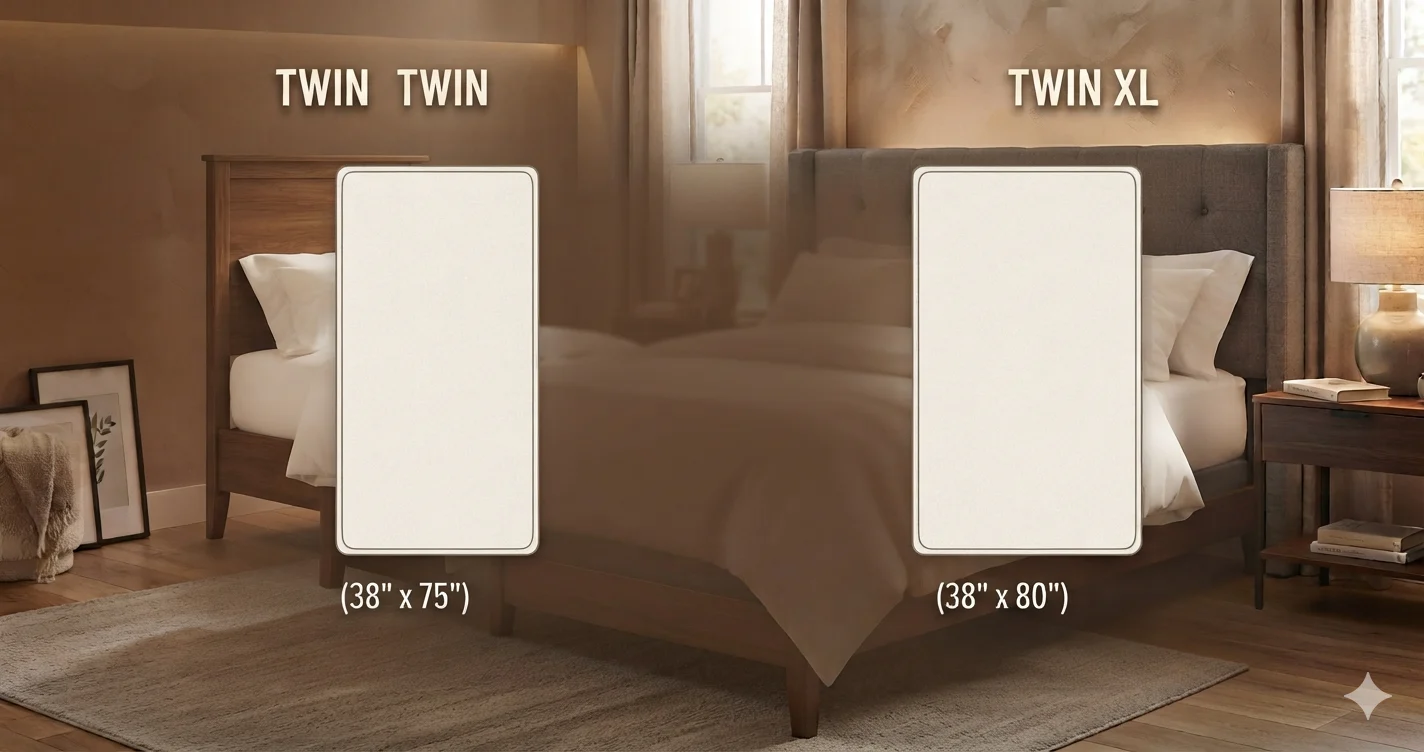
A twin mattress measures 38 inches wide by 75 inches long. It’s the smallest standard adult mattress size and the go-to choice for kids’ rooms, guest rooms, dorm-style setups, and bunk beds.
If you’re wondering how big a twin bed actually is in real-world terms, picture something close to the width of a standard doorway — narrow enough to fit two in a shared kids’ room, but tight for anyone over about 6 feet tall, since 75 inches of length is only 6 feet 3 inches.
That length limitation is exactly why the Twin XL exists. A Twin XL keeps the same 38-inch width but stretches the length to 80 inches — five inches longer, which is enough extra legroom for taller teenagers and adults. This is the size most commonly found in college dorms, precisely because it accommodates taller students without taking up more floor space than a regular twin.
Twin bed facts:
- Width: 38 inches (96.5 cm)
- Length: 75 inches (190.5 cm), or 80 inches (203 cm) for Twin XL
- Best for: single sleepers, kids’ rooms, guest rooms, small apartments, bunk beds
Full Size Bed Dimensions (Double Bed)
A full size mattress — also called a double bed, especially outside the US — measures 54 inches wide by 75 inches long. It’s 16 inches wider than a twin but keeps the same 75-inch length, which means it’s a solid choice for a single sleeper who wants more shoulder and hip room, but still a tight squeeze for two adults sharing.
To put the width in perspective: a full bed gives each person sharing it only about 27 inches of personal space — roughly the width of a crib. That’s why full size beds are usually recommended for solo sleepers, guest rooms meant to feel a step up from a twin, or smaller primary bedrooms where a queen simply won’t fit comfortably alongside a dresser and nightstands.
In terms of total sleeping surface, a full size mattress covers about 33.75 square feet, compared to roughly 28.5 square feet for a twin.
Full size bed facts:
- Width: 54 inches (137 cm)
- Length: 75 inches (190.5 cm)
- Also known as: double bed
- Best for: single sleepers who want extra room, smaller bedrooms, guest rooms
Queen Size Bed Dimensions
The queen is the most popular mattress size sold in the US, and for good reason — it strikes a balance between comfortable width for couples and a footprint that fits in most standard bedrooms.
A queen bed measures 60 inches wide by 80 inches long. That’s 6 inches wider and 5 inches longer than a full, giving two people about 30 inches of space each — noticeably more breathing room than a full size bed offers, without requiring the significantly larger room a king demands.
The extra 5 inches of length compared to a full also matters more than people expect. That jump from 75 to 80 inches is the difference between a mattress that fits a 6-foot-tall sleeper comfortably and one where their feet hang slightly off the edge.
Queen size bed facts:
- Width: 60 inches (152.5 cm)
- Length: 80 inches (203 cm)
- Best for: couples, primary bedrooms of average size, anyone wanting a full-vs-queen upgrade in space without going all the way to king
King Size Bed Dimensions
Now to the main event. A standard king size mattress measures 76 inches wide by 80 inches long. Compared to a queen, that’s a full 16 inches of extra width with the same 80-inch length — which is essentially the equivalent of adding another twin bed’s worth of width to a queen.
That extra width is the whole appeal of a king. Two people sharing a king bed each get roughly 38 inches of personal space — nearly the width of an entire twin mattress per person. It’s the closest a shared bed gets to feeling like each partner has their own separate sleeping surface, which is why king beds are so popular with couples who move around a lot in their sleep, co-sleep with kids or pets, or simply prioritize space over square footage efficiency.
How big is a king bed in square feet? A standard king covers about 42.2 square feet of surface area — noticeably more than a queen’s 33.3 square feet, and almost 50% larger than a full.
King vs. California King
It’s worth clarifying the difference here, since the two are easy to mix up. A California king measures 72 inches wide by 84 inches long — 4 inches narrower but 4 inches longer than a standard king. It’s designed for taller sleepers who want extra legroom and don’t mind trading some width for it. If you’re specifically shopping for “king size bed dimensions,” make sure the listing says standard/eastern king rather than California king, since the two require different sheets and frames despite the similar name.
King Size Bed Headboard Sizing
If you’re shopping for a headboard separately from the mattress and frame, it needs to match the frame width rather than the mattress width exactly. Most king size headboards are built to about 78–80 inches wide to properly frame a 76-inch king mattress with a small margin on each side. Always check the specific frame’s dimensions before buying a headboard separately, since a mismatch of even an inch or two can leave visible gaps or prevent proper mounting.
King size bed facts:
- Width: 76 inches (193 cm)
- Length: 80 inches (203 cm)
- California King: 72 inches wide x 84 inches long
- Headboard width: typically 78–80 inches to match frame
- Best for: couples wanting maximum shared space, primary bedrooms of at least 12×12 feet, co-sleeping households
Comparing All Bed Sizes Side by Side
Seeing the jump between sizes laid out together makes the decision easier, especially if you’re deciding between two adjacent sizes like full vs. queen or queen vs. king.
| Comparison | Width difference | Length difference |
|---|---|---|
| Twin → Full | +16 inches | same |
| Full → Queen | +6 inches | +5 inches |
| Queen → King | +16 inches | same |
| Twin → Queen | +22 inches | +5 inches |
| Full → King | +22 inches | +5 inches |
A pattern worth noticing: the jump from twin to full and the jump from queen to king are both exactly 16 inches wider. That means a king feels as dramatically roomier than a queen as a full feels compared to a twin — a useful mental shortcut if you’re trying to picture the size difference without a tape measure in hand.
How Much Room Do You Actually Need?
Dimensions on paper only tell half the story — what matters more is how the mattress fits in your actual room alongside the rest of your furniture. As a general guideline:
- Twin or Twin XL: comfortable in rooms as small as 7×10 feet
- Full: works well in rooms around 9×10 feet or larger
- Queen: typically needs at least 10×10 feet to leave room for nightstands and walking space
- King: generally requires a room at least 12×12 feet, ideally larger, to avoid the bed overwhelming the space
A helpful rule of thumb: leave at least 24–30 inches of clearance on each side of the bed and at the foot of it for walking space and furniture like dressers.
How to Choose the Right Size for You
A few quick questions can narrow this down fast:
Sleeping alone? A full size bed is often the sweet spot — noticeably roomier than a twin without the cost or space demands of a queen. A twin still makes sense in small apartments or secondary rooms.
Sharing with a partner? Queen is the standard default and works for most couples and most rooms. If your room can accommodate it, a king gives meaningfully more personal space per person, especially valuable for restless sleepers, taller partners, or households where kids or pets regularly end up in the bed.
Tall sleeper (6’1″ or taller)? Look at length as closely as width. A California king’s extra 4 inches of length, or a Twin XL for a single tall sleeper, can matter more than the width upgrade.
Tight on space? Measure your room first, subtract at least 24 inches of clearance per side, and work backward to see which size actually fits — rather than picking a size first and hoping it works.
Frequently Asked Questions
What size is a king size bed? A standard king size bed measures 76 inches wide by 80 inches long (193 cm x 203 cm).
How many inches wide is a king size bed? 76 inches wide.
What size is a queen bed? A queen bed measures 60 inches wide by 80 inches long (152.5 cm x 203 cm).
How wide is a queen bed in inches? 60 inches wide.
What size is a full size bed? A full size bed (also called a double bed) measures 54 inches wide by 75 inches long.
How many inches wide is a full size bed? 54 inches wide.
What size is a twin bed? A twin bed measures 38 inches wide by 75 inches long.
How many inches is a twin bed? 38 inches wide by 75 inches long; a Twin XL is 38 inches wide by 80 inches long.
How long is a twin mattress in feet? 6 feet 3 inches (75 inches), or 6 feet 8 inches (80 inches) for a Twin XL.
How many inches is a king size bed compared to a queen? A king is 16 inches wider than a queen (76 inches vs. 60 inches) but the same 80-inch length.
What’s the difference between a full size bed and a double bed? Nothing — “full” and “double” refer to the exact same mattress size: 54 inches by 75 inches. “Double” is more common in the UK and older US listings.
The Bottom Line
Every mattress size in the US follows the same standard measurements regardless of brand, which makes shopping easier once you know the numbers: twin at 38×75, full at 54×75, queen at 60×80, and king at 76×80 inches. The right choice comes down to how many people are sleeping in the bed, how tall they are, and how much floor space your bedroom can actually spare once you account for walking room and furniture. When in doubt, measure your room first — the tape measure will tell you more than any size chart can.