Accuracy vs Precision: What’s the Difference?

Accuracy vs Precision
Accuracy is how close a measurement is to the true value. Precision is how close repeated measurements are to each other. A measurement can be precise without being accurate (tightly grouped but off-target), accurate on average without being precise (scattered around the target), both, or neither.
These terms are formally defined in the International Vocabulary of Metrology; see the accuracy and precision entry on Wikipedia for background.
The Dartboard Example

| Result | What the Darts Look Like |
|---|---|
| Accurate and precise | Tight cluster on the bullseye |
| Precise but not accurate | Tight cluster, but away from the bullseye |
| Accurate but not precise | Scattered widely, but centered on the bullseye on average |
| Neither | Scattered widely and off-center |
A Real Measurement Example
Suppose a 100.0 g reference weight is placed on three kitchen scales five times each:
| Scale | Readings (g) | Verdict |
|---|---|---|
| A | 100.1, 99.9, 100.0, 100.1, 99.9 | Accurate and precise |
| B | 103.2, 103.1, 103.2, 103.3, 103.2 | Precise, not accurate |
| C | 97.0, 103.5, 99.0, 101.8, 98.7 | Accurate on average, not precise |
Scale B is the interesting case: its readings are very consistent, but every one is about 3 g too high. That’s a systematic error, usually fixed by calibration. Scale C’s scatter is random error, reduced by averaging more readings or using a better instrument.
How to Measure Each
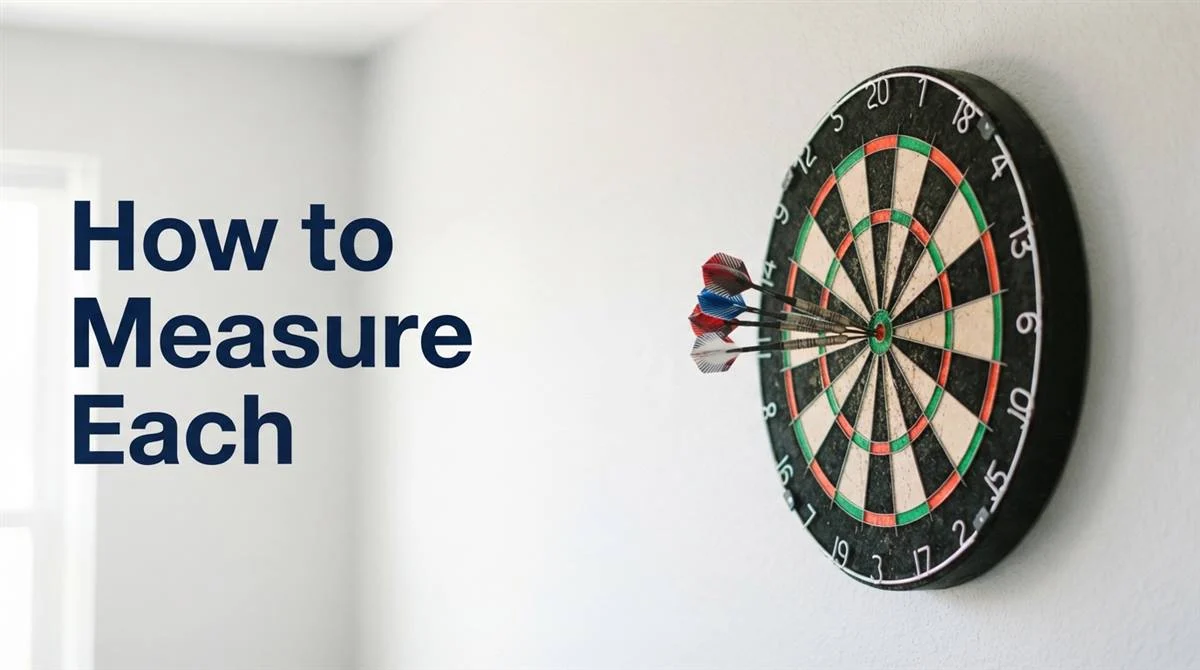
- Accuracy is expressed as error or percent error compared with a known value: percent error = |measured − true| ÷ true × 100.
- Precision is expressed as spread, usually the range or the standard deviation of repeated readings. A smaller standard deviation means higher precision.
For Scale B above, the average is 103.2 g, so the percent error is 3.2%, even though its standard deviation is under 0.1 g.
Repeatability and Reproducibility
Precision is often split into two parts. Repeatability is the agreement between readings taken by the same person, with the same instrument, under the same conditions. Reproducibility is the agreement when conditions change, such as a different operator, lab, or day. A method can be highly repeatable but poorly reproducible.
Why the Difference Matters
In manufacturing, a precise but inaccurate machine is actually easy to fix: shift its setting by the known offset. An imprecise machine is harder, because its errors are unpredictable. That’s why engineers check both, and why instruments are both calibrated (for accuracy) and tested for repeatability (for precision).

Related Topics
See also types of measurement errors, resolution vs accuracy, what is calibration, and absolute vs relative error.
Frequently Asked Questions
What is the difference between accuracy and precision?
Accuracy is closeness to the true value; precision is closeness of repeated measurements to each other.
Can a measurement be precise but not accurate?
Yes. Readings can be tightly grouped but all shifted away from the true value by a systematic error.
How do you improve accuracy?
Calibrate the instrument against a known reference and correct systematic errors.
How do you improve precision?
Reduce random error by controlling conditions, using a better instrument, and averaging repeated readings.
How is precision measured?
Usually by the standard deviation or range of repeated readings.
FAQ
What is the difference between accuracy and precision?
Accuracy is closeness to the true value; precision is closeness of repeated measurements to each other.
Can a measurement be precise but not accurate?
Yes. Readings can be tightly grouped but all shifted away from the true value by a systematic error.
How do you improve accuracy?
Calibrate the instrument against a known reference and correct systematic errors.
How do you improve precision?
Reduce random error by controlling conditions, using a better instrument, and averaging repeated readings.
How is precision measured?
Usually by the standard deviation or range of repeated readings.
Related Articles

What Is a Sensor? Types, Examples & How They Work
A sensor detects a physical quantity like temperature or pressure and turns it into a signal. Learn the main types of sensors, examples, and key specifications.

What Is Metrology? The Science of Measurement
Metrology is the science of measurement. Learn its three branches, how traceability and the SI keep measurements consistent worldwide, and where metrology is used.

Resolution vs Accuracy: What’s the Difference?
Resolution is the smallest change an instrument can show; accuracy is how close its reading is to the true value. Learn the difference with examples.

What Is Calibration? Meaning, Process & Examples
Calibration compares an instrument's readings with a more accurate reference standard. Learn how calibration works, calibration vs adjustment, and how often to calibrate.