Resolution vs Accuracy: What’s the Difference?

Resolution vs Accuracy
Resolution is the smallest change an instrument can detect or display. Accuracy is how close the instrument’s reading is to the true value. A digital thermometer that shows 21.37 °C has a resolution of 0.01 °C, but if it’s only accurate to ±0.5 °C, the true temperature could be anywhere from about 20.9 to 21.9 °C. More digits don’t mean more accuracy.
For background, see the accuracy and precision entry on Wikipedia.
Comparison Table
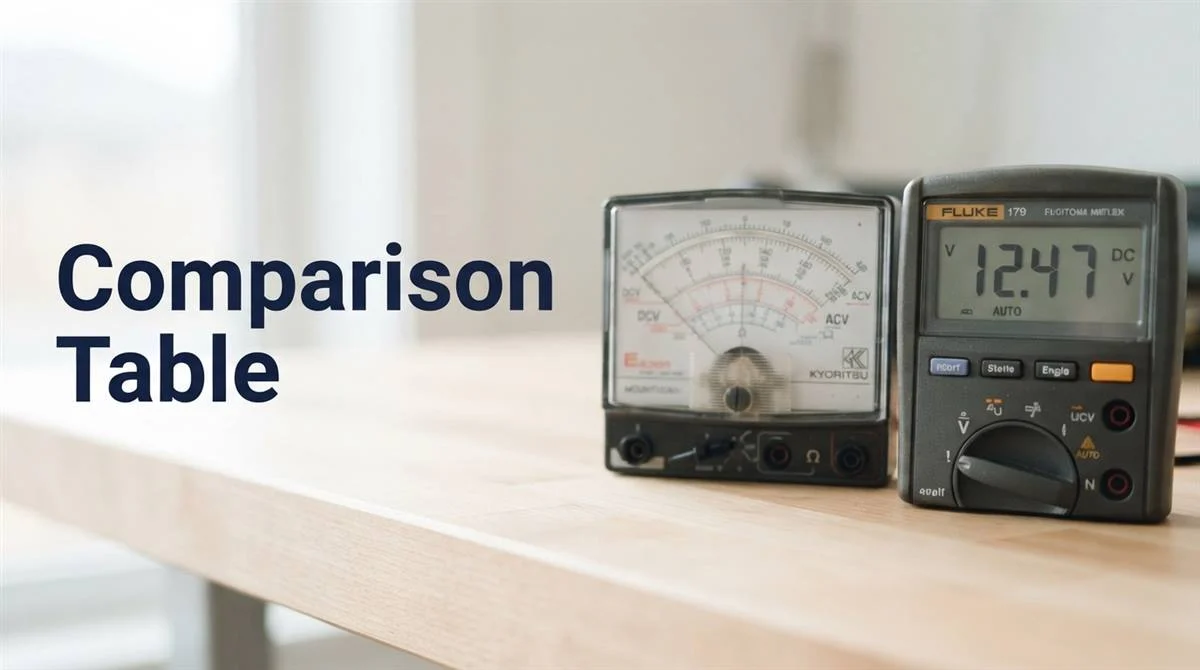
| Resolution | Accuracy | |
|---|---|---|
| Meaning | Smallest readable step | Closeness to the true value |
| Set by | Scale markings or number of display digits | Design quality and calibration |
| Example | Scale shows 0.1 g steps | Scale is correct to ±0.5 g |
| Improved by | Finer scale, more digits | Calibration, better instrument |
Examples
- Kitchen scale: displays 1 g steps (resolution) but may be off by 2 to 3 g (accuracy), especially near its maximum load.
- Tape measure: marked in 1/16 inch (resolution); a stretched or bent hook can make it inaccurate by more than that.
- Digital caliper: displays 0.01 mm, but many are specified to about ±0.02 to 0.03 mm accuracy.
- Bathroom scale: shows 0.1 kg but may read 1 kg differently on carpet versus tile.
Where Precision Fits In
Precision is a third, separate idea: how consistently an instrument gives the same reading for the same quantity. An instrument can have fine resolution and good precision yet still be inaccurate if it has a systematic offset. See accuracy vs precision for a full explanation.

Sensitivity
Sensitivity is how much an instrument’s output changes for a given change in input, for example, millivolts per degree for a temperature sensor. High sensitivity makes fine resolution possible, but it doesn’t guarantee accuracy either.
Choosing the Right Instrument
A common rule of thumb is that an instrument’s resolution should be about 10 times finer than the tolerance you need to check. To verify a part within ±0.1 mm, use an instrument that resolves 0.01 mm, like a micrometer. Then confirm its accuracy through calibration; resolution alone won’t tell you whether the readings are right.
How to Read Specifications
Manufacturers often state accuracy as “±(% of reading + counts).” For example, a multimeter rated ±(0.5% + 2 counts) on a 20.00 V range reading 12.00 V has an accuracy of ±(0.06 + 0.02) = ±0.08 V, even though its resolution is 0.01 V.

Related Topics
See also types of measurement errors, significant figures in measurement, measurement uncertainty, and what is a sensor.
Frequently Asked Questions
What is the difference between resolution and accuracy?
Resolution is the smallest step an instrument can show; accuracy is how close the reading is to the true value.
Does higher resolution mean higher accuracy?
No. An instrument can display many digits and still be inaccurate.
What is resolution in measurement?
The smallest change in a quantity that an instrument can detect or display.
What is the 10:1 rule?
A guideline that an instrument’s resolution should be about ten times finer than the tolerance being measured.
How is accuracy specified?
Often as ± a value, a percentage of reading, or a percentage plus a number of display counts.
Related Articles

What Is a Sensor? Types, Examples & How They Work
A sensor detects a physical quantity like temperature or pressure and turns it into a signal. Learn the main types of sensors, examples, and key specifications.

What Is Metrology? The Science of Measurement
Metrology is the science of measurement. Learn its three branches, how traceability and the SI keep measurements consistent worldwide, and where metrology is used.

What Is Calibration? Meaning, Process & Examples
Calibration compares an instrument's readings with a more accurate reference standard. Learn how calibration works, calibration vs adjustment, and how often to calibrate.

What Is Measurement Uncertainty? A Simple Guide
Measurement uncertainty is the doubt that exists about any measurement result. Learn Type A and Type B uncertainty, how to combine them, and a worked example.