Pounds to Kilograms Converter
1 pound = 0.45359237 kg · 1 kg = 2.20462 lb
Weight & MassHow to Use This Tool
Multiply pounds by 0.45359237 to get kilograms. That factor is exact, defined by international agreement since 1959. One pound is 0.453592 kg, and one kilogram is 2.20462 lb. The converter on this page uses that precise value for every calculation.
Pounds to kilograms quick reference
| Pounds (lb) | Kilograms (kg) |
|---|---|
| 1 lb | 0.454 kg |
| 2 lb | 0.907 kg |
| 5 lb | 2.268 kg |
| 10 lb | 4.536 kg |
| 15 lb | 6.804 kg |
| 20 lb | 9.072 kg |
| 25 lb | 11.340 kg |
| 30 lb | 13.608 kg |
| 40 lb | 18.144 kg |
| 50 lb | 22.680 kg |
| 75 lb | 34.019 kg |
| 100 lb | 45.359 kg |
| 120 lb | 54.431 kg |
| 140 lb | 63.503 kg |
| 150 lb | 68.039 kg |
| 160 lb | 72.575 kg |
| 170 lb | 77.111 kg |
| 180 lb | 81.647 kg |
| 200 lb | 90.718 kg |
| 250 lb | 113.398 kg |
| 300 lb | 136.078 kg |
For values not listed, type them into the converter above or multiply by 0.453592.
How to convert pounds to kilograms
The formula
kilograms = pounds x 0.45359237
For a rough estimate, divide by 2.2. That gets you within 0.3% of the exact answer, which is close enough for most everyday situations.
Example 1: body weight
A person weighs 165 lb. 165 x 0.453592 = 74.84 kg. Most scales round to one decimal, so 74.8 kg.
Example 2: luggage
An airline has a 23 kg checked bag limit. You packed 48 lb. 48 x 0.453592 = 21.77 kg. You are under the limit by about 1.2 kg.
Example 3: pet weight
A dog weighs 62 lb at the vet. 62 x 0.453592 = 28.12 kg. Drug dosages for animals are calculated per kilogram, so this conversion matters for medication.
Example 4: dumbbell weight
A set of 35 lb dumbbells. 35 x 0.453592 = 15.88 kg. The nearest standard metric dumbbell is 16 kg, so they are nearly identical.
When you need this conversion
Medical and health
Most of the world records body weight in kilograms. US medical charts use pounds, but drug dosing, BMI calculations, and international medical literature work in kg. A 180 lb patient is 81.6 kg. Getting this wrong affects medication dosages, anesthesia calculations, and nutritional assessments.
Travel and shipping
Airlines outside the US post baggage limits in kilograms. A typical economy limit is 23 kg (about 50.7 lb). Overweight fees kick in at the kilogram threshold, not a rounded pound figure, so knowing the exact conversion avoids surprises at check-in.
Fitness
Olympic weightlifting uses kilogram plates. A 225 lb bench press is 102.1 kg. Gym equipment varies by country, and converting between the two systems is part of following any international training program.
Cooking in bulk
Restaurant supply and wholesale food comes in pound quantities in the US. European recipes for large batches specify kilograms. A 10 lb bag of flour is 4.54 kg. Scaling recipes across systems without converting accurately throws off ratios.
Common objects in pounds and kilograms
| Object | Pounds | Kilograms |
|---|---|---|
| Smartphone | 0.4 lb | 0.18 kg |
| Bag of sugar (small) | 5 lb | 2.27 kg |
| House cat | 8-11 lb | 3.6-5.0 kg |
| Bowling ball (regulation) | 6-16 lb | 2.7-7.3 kg |
| Car tire | 20-25 lb | 9.1-11.3 kg |
| Medium suitcase (packed) | 40-50 lb | 18.1-22.7 kg |
| Large dog (Labrador) | 55-80 lb | 24.9-36.3 kg |
| Bag of concrete | 60-80 lb | 27.2-36.3 kg |
Tips for accurate conversions
- The quick mental shortcut is to divide pounds by 2.2. For 150 lb: 150 / 2.2 = 68.2 kg. The precise answer is 68.04 kg, so the shortcut overshoots by about 0.2%.
- For body weight, one decimal place is enough. Medical records rarely go beyond that, and bathroom scales are not accurate to the gram anyway.
- Pounds and kilograms both measure mass in everyday use. The technical distinction between mass and weight only matters in physics and engineering contexts.
- If you are converting stones to kilograms, first multiply stones by 14 to get pounds, then multiply by 0.453592. Or multiply stones directly by 6.35029.
Frequently asked questions
How many kilograms is 1 pound?
1 lb = 0.453592 kg. The exact value is 0.45359237 kg.
How many pounds is 1 kilogram?
1 kg = 2.20462 lb.
How do I convert 150 pounds to kg?
150 x 0.453592 = 68.04 kg.
What is 200 pounds in kilograms?
200 x 0.453592 = 90.72 kg.
Is 1 kg equal to 2 pounds?
No. 1 kg equals 2.205 pounds, not 2. The difference is about 10%, which adds up quickly at higher weights.
How do I convert kg back to pounds?
Multiply kilograms by 2.20462. For example, 70 kg x 2.20462 = 154.32 lb.
Why do some countries use pounds and others use kilograms?
The US, Liberia, and Myanmar still use the imperial system for everyday measurements. Most other countries adopted the metric system, which uses kilograms. The UK uses a mix, with stones and pounds for body weight and kilograms for most other purposes.
What is the difference between a pound and a troy pound?
A standard (avoirdupois) pound is 453.592 grams. A troy pound, used for precious metals, is 373.242 grams. Troy pounds have 12 ounces instead of 16, and each troy ounce is 31.1 grams instead of 28.35 grams.
Related conversion tools
Measurement guides
Formula & Explanation
The pound is defined as exactly 0.45359237 kilograms by international agreement. The reverse factor (1 kg = 2.20462 lb) is a rounded representation of 1/0.45359237.
Frequently Asked Questions
How do I convert pounds to kilograms?
To convert pounds to kilograms, multiply the pounds value by 0.45359237. For example, 1 pounds = 0.45359237 kilograms. Our converter above does this calculation instantly as you type.
What is the formula for pounds to kilograms?
The formula is: kilograms = pounds u00d7 0.45359237. This is a linear conversion, meaning the ratio is constant regardless of the value being converted.
Is this pounds to kilograms converter accurate?
Yes. Our converter uses the internationally recognized conversion factor of 1 pounds = 0.45359237 kilograms, which is the standard accepted by NIST and most engineering references. Results are rounded to a sensible precision to avoid floating-point noise.
Can I convert kilograms back to pounds?
Yes. The converter is bidirectional u2014 type in either field and the other updates automatically. To convert kilograms to pounds, divide the kilograms value by 0.45359237, or simply use the swap button (u21c4) between the two fields.
Why would I need to convert pounds to kilograms?
Common reasons include international travel (different countries use different measurement systems), cooking recipes from other regions, engineering and construction work, scientific calculations, and understanding product specifications listed in unfamiliar units.
Related Articles
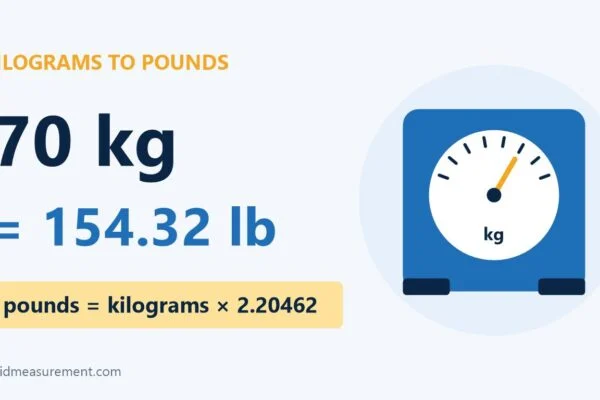
70 Kilograms to Pounds: 70 kg = 154.32 lb
70 kilograms equals 154.32 pounds. See the kg to lb formula, a 60-80 kg table, and why 70 kg is a reference weight in boxing and medicine.
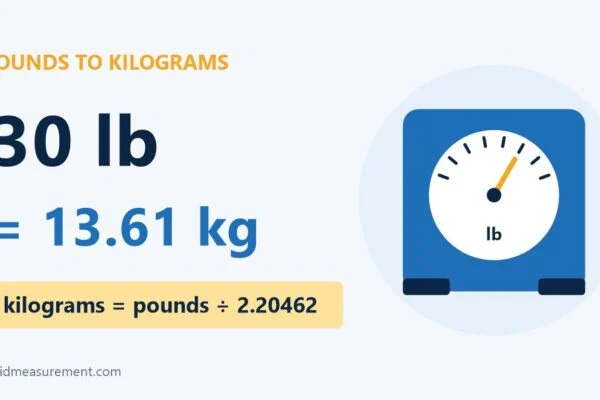
30 Pounds to Kilograms: 30 lb = 13.61 kg
30 pounds equals 13.61 kilograms. Learn the lb to kg formula, see a 20-40 lb table and what weighs about 30 pounds in daily life.
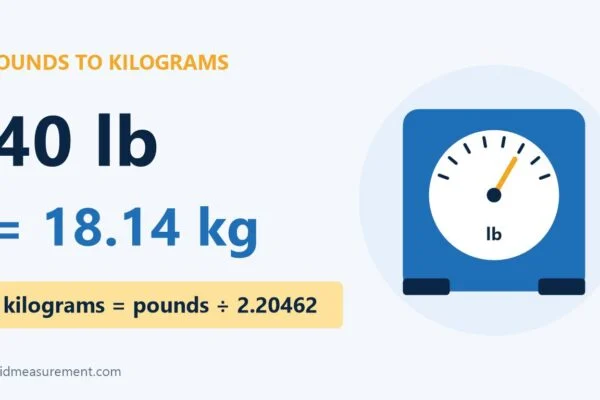
40 Pounds to Kilograms: 40 lb = 18.14 kg
40 pounds equals 18.14 kilograms. Get the formula, a 30-50 lb table, car seat context and an easy 0.45 shortcut for 40 lb to kg.
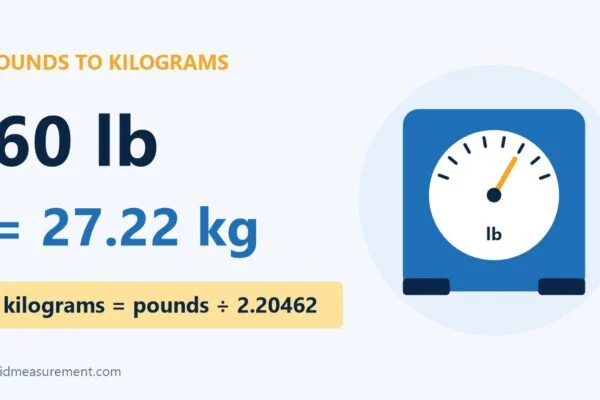
60 Pounds to Kilograms: 60 lb = 27.22 kg
60 pounds equals 27.22 kilograms. See the lb to kg formula, a quick table, an airline-limit example and a mental-math shortcut for 60 lb.