Feet to Meters Converter
1 foot = 0.3048 meters · 1 meter = 3.28084 feet
Length & DistanceHow to Use This Tool
1 foot = 0.3048 meters · 1 meter = 3.28084 feet
Feet to meters quick reference table
Every value below uses the exact factor of 1 ft = 0.3048 m.
| Feet | Meters | Feet | Meters |
|---|---|---|---|
| 1 ft | 0.3048 m | 20 ft | 6.096 m |
| 2 ft | 0.6096 m | 25 ft | 7.62 m |
| 3 ft | 0.9144 m | 30 ft | 9.144 m |
| 4 ft | 1.2192 m | 40 ft | 12.192 m |
| 5 ft | 1.524 m | 50 ft | 15.24 m |
| 5.5 ft | 1.6764 m | 60 ft | 18.288 m |
| 6 ft | 1.8288 m | 75 ft | 22.86 m |
| 7 ft | 2.1336 m | 80 ft | 24.384 m |
| 8 ft | 2.4384 m | 90 ft | 27.432 m |
| 10 ft | 3.048 m | 100 ft | 30.48 m |
| 12 ft | 3.6576 m | 150 ft | 45.72 m |
| 15 ft | 4.572 m | 200 ft | 60.96 m |
How to convert feet to meters (formula + examples)
The conversion between feet and meters is exact, not an approximation. One foot was defined as precisely 0.3048 meters in 1959, when the US, UK, Canada, Australia, New Zealand, and South Africa signed the International Yard and Pound Agreement.
The formula
meters = feet × 0.3048
To go the other way: feet = meters ÷ 0.3048 (or multiply by 3.28084)
Worked example 1: converting 5.5 feet to meters
5.5 ft × 0.3048 = 1.6764 meters
A person who is 5 feet 6 inches tall (5.5 ft) stands 1.68 meters tall, rounded to two decimal places. This comes up a lot when filling out forms that ask for height in meters. If you know your height in feet and inches, convert the inches to a decimal first (6 inches = 0.5 feet), then multiply.
Worked example 2: converting 12 feet to meters
12 ft × 0.3048 = 3.6576 meters
A 12-foot room is about 3.66 meters long. Standard shipping containers come in 20-foot (6.1 m) and 40-foot (12.2 m) lengths, so knowing the meter equivalent is useful when planning warehouse layouts or estimating cargo space.
Worked example 3: converting 100 feet to meters
100 ft × 0.3048 = 30.48 meters
A 100-foot lot is just over 30 meters. For comparison, the 100-meter dash in track and field covers about 328 feet, roughly 3.3 times the length of that same lot.
When you need feet-to-meters conversion
Home improvement and construction
Lumber in the US is sold in feet (8-foot 2×4s, 12-foot deck boards), but many power tools and engineering specs reference millimeters and meters. If you’re reading a plan from a European manufacturer or ordering materials internationally, you’ll need to convert room dimensions from feet to meters. A standard US ceiling height of 8 feet is 2.44 meters; a 10-foot ceiling is 3.05 meters.
Real estate and property
Property listings in the US measure lot size in square feet, but international buyers and many online platforms use square meters. A 2,000-square-foot apartment is about 186 square meters. When comparing rental prices across cities globally, converting to a common unit makes the math cleaner. Use our Area Converter for square footage conversions.
Health and fitness
Medical forms, BMI calculators, and fitness apps often ask for height in meters. If you know your height in feet and inches, say 5’10”, you’d convert to 5.833 feet, then multiply by 0.3048 to get 1.778 meters. Or just use the converter above and skip the math. See also: our BMI Calculator, which accepts both units.
Travel and international standards
Elevation signs, pool depth markers, and trail distances outside the US are posted in meters. When a hotel lists its pool as “1.5 m deep,” that’s about 4.9 feet, enough to stand in for most adults. Altitude readings on European hiking trails can be converted to feet to match what you’re used to seeing on US trail maps.
Real-world objects measured in feet and meters
Objects from our reference library that give you a physical sense of the feet-to-meters scale:
- Standard interior door (US): 6.67 feet tall (2.03 meters). Walk through one and you’ve crossed just over 2 meters vertically.
- Twin-size mattress: 6.25 feet long (1.91 meters). Lay one end to end and you have a solid 2-meter reference.
- 65-inch TV: the screen diagonal is 5.42 feet (1.65 meters). The whole unit with bezel and stand is about 1.45 meters wide.
- US dollar bill: 0.51 feet (0.156 meters). About 6.5 bills end to end make 1 meter, or about 2 bills for 1 foot.
Browse all reference objects: Object Dimensions Library →
Tips for accurate conversion
- Avoid chain conversions. Converting feet to inches to centimeters to meters introduces rounding errors at each step. Go directly from feet to meters using the 0.3048 factor.
- Watch feet-and-inches notation. “5’10″” means 5 feet 10 inches, not 5.10 feet. Convert the inches portion separately: 10 inches = 10/12 = 0.833 feet. So 5’10” = 5.833 feet = 1.778 meters.
- Match your precision to the job. For home projects, rounding to 2 decimal places (centimeter precision) is fine. For engineering or lab work, carry 4 to 6 decimal places. Our converter shows 6 significant digits.
- Don’t confuse feet with foot-pounds or foot-candles. “Foot” in compound units refers to the unit of length, but the compound measures something different entirely (torque and illuminance, respectively).
Feet vs. meters: the two systems
Feet belong to the US customary system (and the older imperial system). The foot was historically based on the length of a human foot, though its exact size varied by region until it was standardized in 1959. One foot equals 12 inches, 3 feet make a yard, and 5,280 feet make a mile.
Meters are the base unit of length in the International System of Units (SI), used by every country except the US, Myanmar, and Liberia for everyday measurements. One meter was originally defined as one ten-millionth of the distance from the North Pole to the equator along the Paris meridian. Today it’s defined by the speed of light: the distance light travels in 1/299,792,458 of a second.
In practice, a meter is about 10% longer than a yard (3 feet). That 10% gap is where most conversion confusion comes from. A room that “feels” like 10 feet long is only about 3 meters, not 3.3.
Frequently asked questions
How do I convert feet to meters?
Multiply the feet value by 0.3048. For example, 6 feet × 0.3048 = 1.8288 meters. The converter at the top of this page does this automatically as you type.
What is the formula for feet to meters?
meters = feet × 0.3048. This is an exact conversion, not rounded or approximate. It was established by the 1959 International Yard and Pound Agreement.
How many meters is 5 feet 8 inches?
First convert to decimal feet: 5 + (8/12) = 5.667 feet. Then multiply: 5.667 × 0.3048 = 1.727 meters. A person who is 5’8″ stands about 1.73 meters tall.
How many meters is 6 feet?
6 feet = 1.8288 meters, or about 1.83 meters. A 6-foot person is just over 1.83 m tall, roughly the length of a twin mattress.
Is a meter longer than a foot?
Yes. One meter equals 3.281 feet, so a meter is roughly 3 feet 3 inches, about 10% longer than a yard (3 feet).
Why does the US use feet instead of meters?
The US never fully adopted the metric system. Congress authorized metric use in 1866 and made it the preferred system for trade in 1988 (the Omnibus Trade and Competitiveness Act), but adoption has been voluntary. Construction, real estate, and everyday life remain in feet and inches, while science, medicine, and the military largely use metric.
How do I convert square feet to square meters?
Multiply square feet by 0.0929 (which is 0.3048 squared). So 1,000 sq ft = 92.9 sq meters. For exact conversions, use our Area Converter.
What is 10 feet in meters?
10 feet = 3.048 meters. A 10-foot ceiling is just over 3 meters high, the standard for luxury apartments and older buildings with tall ceilings.
Related conversion tools
- Inches to Centimeters Converter (1 inch = 2.54 cm)
- Inches to Feet Converter (1 foot = 12 inches)
- Millimeters to Inches Converter (1 inch = 25.4 mm)
- Miles to Kilometers Converter (1 mile = 1.609 km)
- General Length Converter
Measurement guides
- Height Conversion Chart: Inches, Feet & Centimeters
- Inches Explained: Conversion Chart, Tools, and Real-World Examples
- How Big Is X Inches? A Visual Size Guide From 1 to 16 Inches
Visual comparisons
Formula & Explanation
The foot-to-meter conversion is exact: 1 foot is defined as exactly 0.3048 meters by the 1959 international agreement. The reverse factor (1 meter = 3.28084 feet) is a rounded representation of 1/0.3048.
Frequently Asked Questions
How do I convert feet to meters?
To convert feet to meters, multiply the feet value by 0.3048. For example, 1 feet = 0.3048 meters. Our converter above does this calculation instantly as you type.
What is the formula for feet to meters?
The formula is: meters = feet u00d7 0.3048. This is a linear conversion, meaning the ratio is constant regardless of the value being converted.
Is this feet to meters converter accurate?
Yes. Our converter uses the internationally recognized conversion factor of 1 feet = 0.3048 meters, which is the standard accepted by NIST and most engineering references. Results are rounded to a sensible precision to avoid floating-point noise.
Can I convert meters back to feet?
Yes. The converter is bidirectional u2014 type in either field and the other updates automatically. To convert meters to feet, divide the meters value by 0.3048, or simply use the swap button (u21c4) between the two fields.
Why would I need to convert feet to meters?
Common reasons include international travel (different countries use different measurement systems), cooking recipes from other regions, engineering and construction work, scientific calculations, and understanding product specifications listed in unfamiliar units.
Related Articles
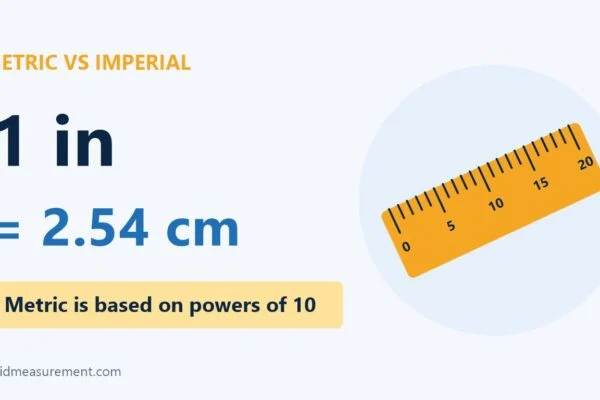
Metric vs. Imperial: What’s the Difference?
Metric vs imperial: how the two systems differ, why the US still uses imperial units, and a quick conversion cheat sheet for length, weight and volume.
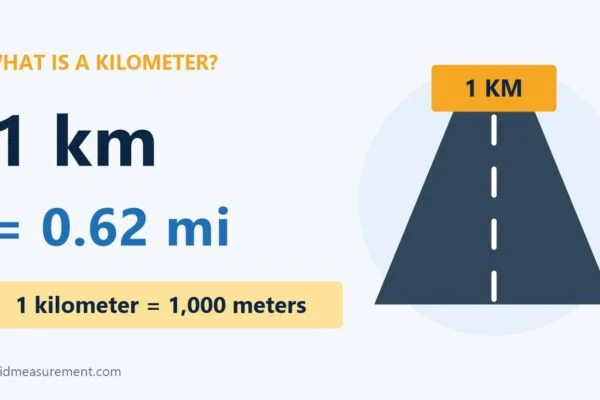
What Is a Kilometer?
A kilometer is 1,000 meters, about 0.62 miles. Learn how big a km is, why most of the world uses it, and common kilometer conversions.
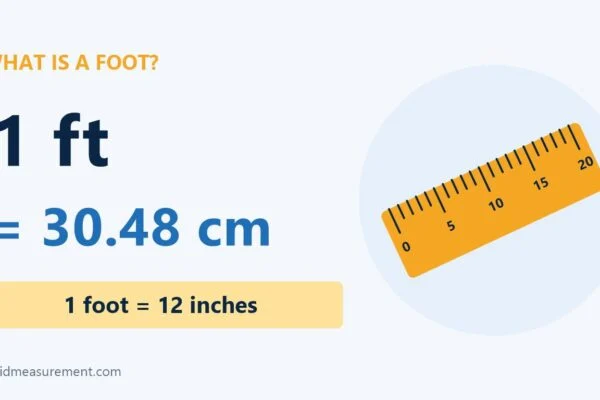
What Is a Foot?
A foot equals 12 inches or 30.48 cm. Learn how big a foot is, its history, why aviation still uses it, and common foot conversions.
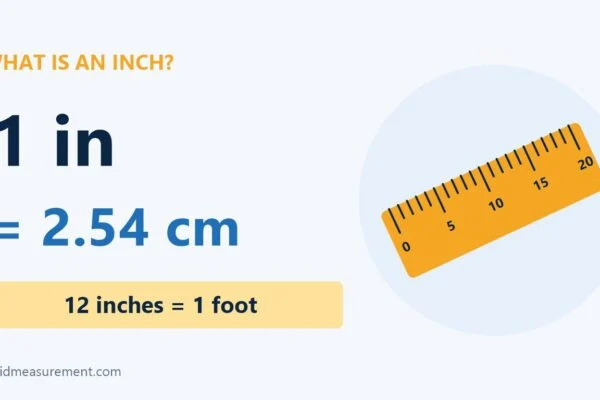
What Is an Inch?
An inch is exactly 2.54 cm, or 1/12 of a foot. Learn how big an inch is, where it came from, and how it converts to cm, feet and yards.