Metric vs. Imperial: What’s the Difference?
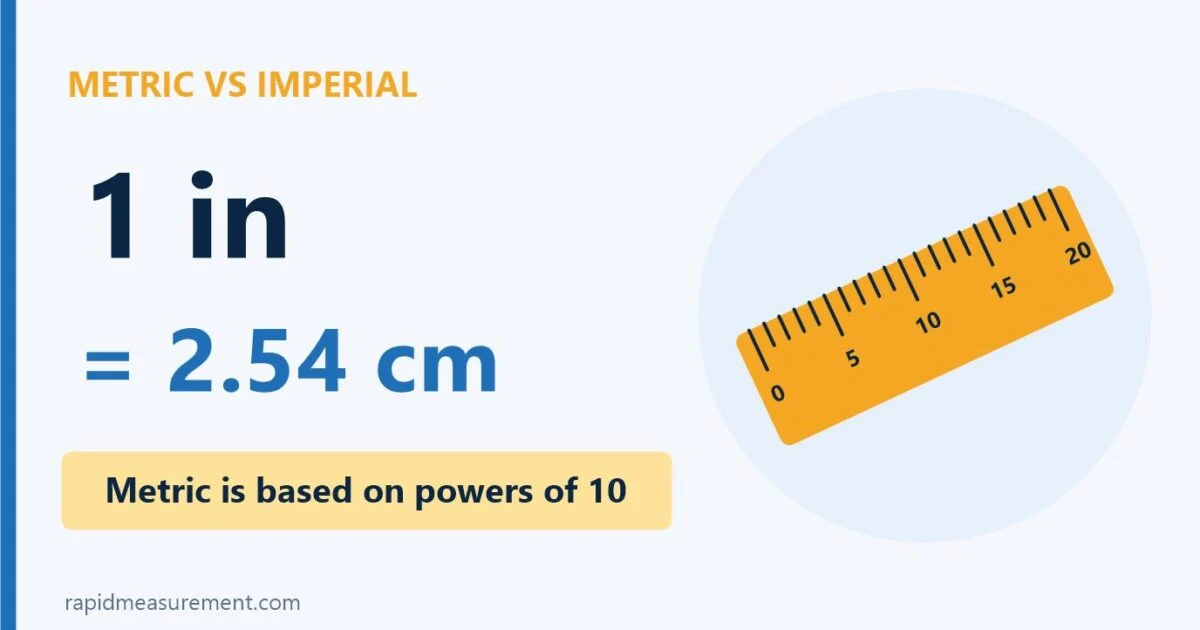
Metric vs. Imperial: What’s the Difference?
The metric system is a decimal-based measurement system built on units of 10 (meters, grams, liters), used by nearly every country in the world. The imperial system (and its close relative, the US customary system) uses units like feet, pounds, and gallons, with conversion factors that rarely divide evenly. The United States is the most prominent country still using imperial units for everyday life. For a general reference, see the Wikipedia entry on metric system.
How the Two Systems Compare

| Measurement | Metric Unit | Imperial Unit |
|---|---|---|
| Length (small) | Centimeter | Inch |
| Length (medium) | Meter | Foot / Yard |
| Length (long) | Kilometer | Mile |
| Weight | Gram / Kilogram | Ounce / Pound |
| Volume | Liter / Milliliter | Gallon / Fluid Ounce |
| Temperature | Celsius | Fahrenheit |
Why the Metric System Is Easier to Calculate With

Every metric unit relates to every other unit in its category by a power of 10 — 100 centimeters make a meter, 1,000 meters make a kilometer, 1,000 grams make a kilogram. Converting between them is just a matter of shifting a decimal point. Imperial units, by contrast, use a tangle of different conversion factors: 12 inches to a foot, 3 feet to a yard, 1,760 yards to a mile, 16 ounces to a pound — each relationship has to be memorized separately.
Why the Imperial System Still Exists
If metric is mathematically simpler, why does the US (and a handful of other countries) still use imperial units? Mostly inertia and cost. By the time the metric system gained global traction in the 19th and 20th centuries, the US had already built enormous infrastructure, manufacturing standards, and everyday habits around inches, feet, and pounds. Switching entirely would mean re-tooling factories, reprinting road signs, and retraining generations of workers — a cost that has repeatedly outweighed the benefits in the eyes of US policymakers.
Notably, even the US officially defines its imperial units in metric terms — an inch is legally 2.54 cm, a pound is legally 0.45359237 kg — meaning the “imperial” system used today is really just metric units wearing a different name.
Where the Two Systems Overlap Today
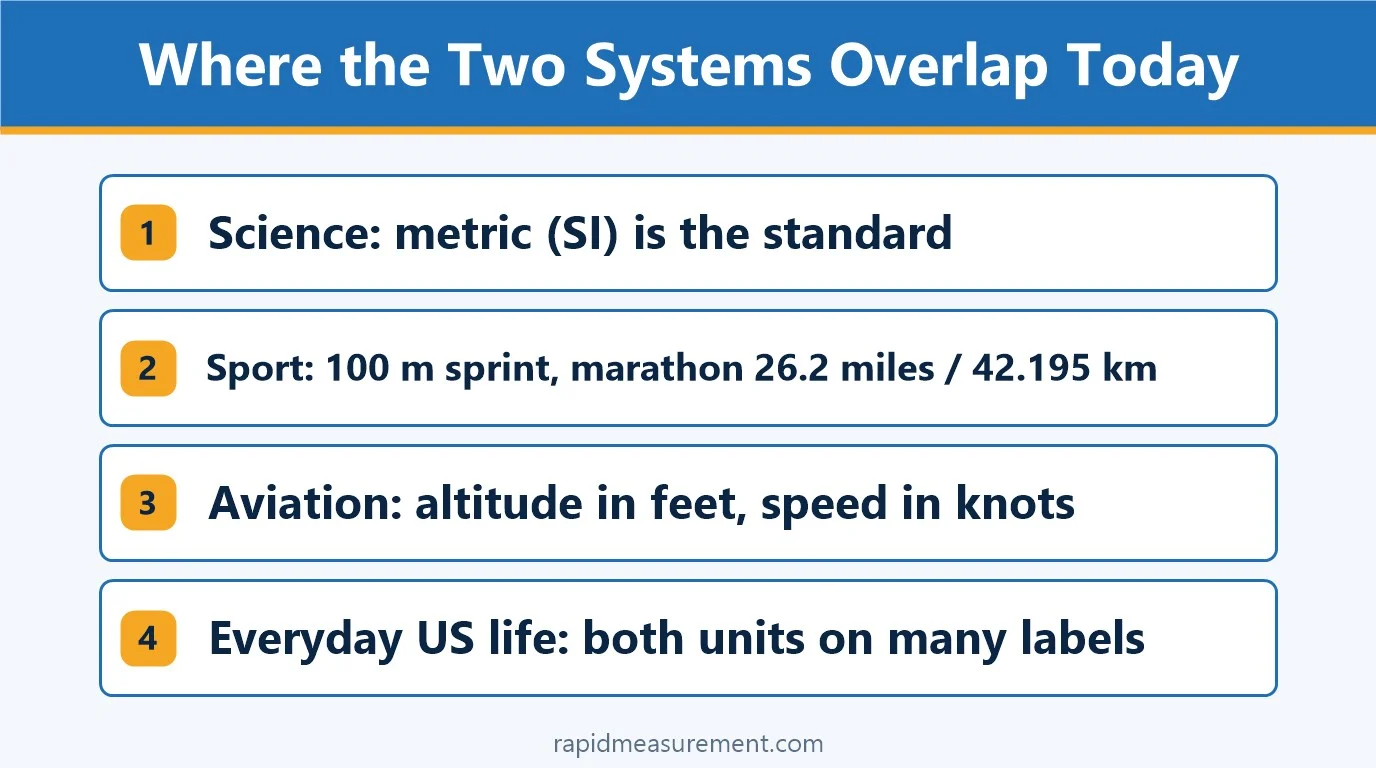
- Science and medicine: Even in the US, scientific research, pharmaceuticals, and much of healthcare use metric units (milligrams, milliliters) for precision.
- International trade: US manufacturers selling globally often produce metric and imperial versions of the same product.
- Sports: Some US sports (football, baseball) use yards and feet, while others (running, swimming) follow international metric standards.
- Aviation: Altitude is measured in feet worldwide by convention, even in fully metric countries — one of the few imperial holdouts with near-universal adoption.
A Quick Conversion Cheat Sheet
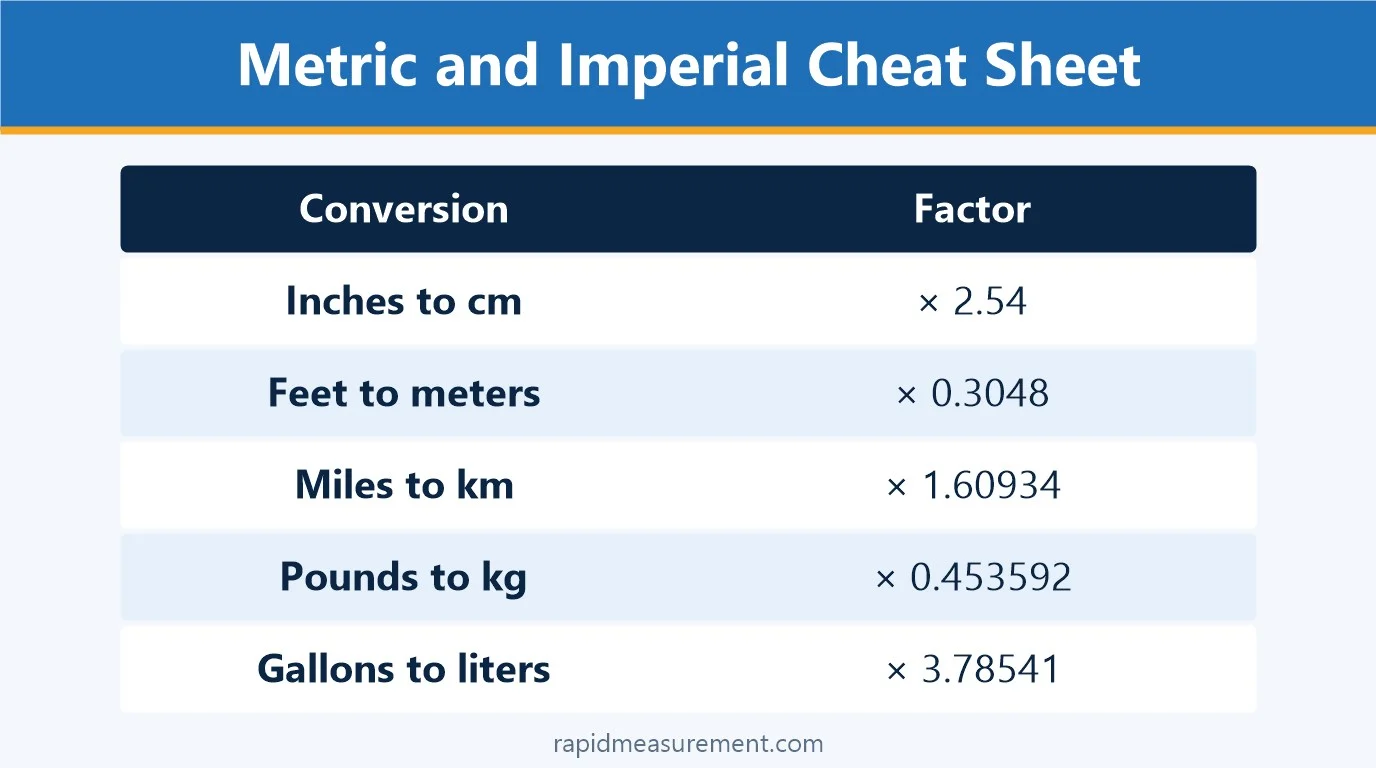
| To Convert | Multiply By |
|---|---|
| Inches → Centimeters | 2.54 |
| Feet → Meters | 0.3048 |
| Miles → Kilometers | 1.60934 |
| Pounds → Kilograms | 0.453592 |
| Gallons → Liters | 3.78541 |
Explore Each Unit in Depth
For a closer look at specific units on each side of the divide, see our guides to the inch, foot, yard, and centimeter, or the weight-focused breakdown of the gram and pound.
A Brief History of Both Systems
The metric system was created in France in the 1790s, during a period of revolutionary reform that also swept away many of the country’s inconsistent local units. Its designers wanted something scientific, decimal, and universal — a length unit derived from the Earth itself, and every other unit built cleanly from it. The imperial system, by contrast, evolved gradually over centuries from a patchwork of English body-based and trade-based units, only formally standardized much later, in 1824, and again in 1959 when the US and other countries fixed it in metric terms.
This history explains the core difference in character between the two systems: metric was designed all at once, top-down, for consistency; imperial grew organically, bottom-up, and was only cleaned up afterward.
The Metrication Movement
Most countries transitioned to the metric system during the 19th and 20th centuries, often as part of broader modernization and international trade efforts. The UK, despite giving its name to the “imperial” system, officially adopted metric measurements for most purposes starting in the 1960s, though imperial units still linger in some everyday British contexts like road distances (miles) and body weight (stone). The US attempted a voluntary metrication push in the 1970s that ultimately stalled, leaving it as the most prominent holdout among developed nations.
Common Points of Confusion Between the Systems
- “Ounce” means different things depending on whether it’s measuring weight or fluid volume, a confusion that doesn’t exist in the metric system’s cleaner separation of grams and liters.
- Temperature scales don’t share a zero point — 0°C (freezing) is 32°F, making mental conversion between Celsius and Fahrenheit far less intuitive than length or weight conversions.
- “Ton” varies by system — a US (short) ton is 2,000 lb, a UK (long) ton is 2,240 lb, and a metric tonne is 1,000 kg, three different weights sharing similar names.
Frequently Asked Questions
What is the difference between metric and imperial?
Metric is a decimal-based system (units of 10) used by most of the world; imperial uses units like feet, pounds, and gallons with irregular conversion factors, and is still used primarily in the US.
Why doesn’t the US use the metric system?
Mainly due to the cost and disruption of converting existing infrastructure, manufacturing, and everyday habits built around imperial units over a long history.
Is imperial the same as US customary units?
They’re closely related but not identical — a few units, like fluid ounces and gallons, differ slightly in exact size between the British imperial system and the US customary system.
Which system is more accurate?
Neither is inherently more accurate — both can be measured with arbitrary precision. Metric is simply easier to calculate with due to its consistent base-10 structure.
Do American scientists use metric or imperial units?
Metric. Nearly all scientific research and medical practice in the US uses metric units, even though the general public uses imperial units in daily life.
Has any country fully switched from imperial to metric recently?
Most metrication happened decades ago, but countries like Myanmar have announced more recent official transitions, while others (like the UK) remain in a long-running partial state, officially metric but culturally mixed.
Famous Failures Caused by Unit Confusion
The most well-known real-world consequence of mixing measurement systems is NASA’s 1999 Mars Climate Orbiter, lost when one engineering team’s software used metric units (newton-seconds) while another used imperial units (pound-seconds) for the same navigation calculations, without either team catching the mismatch before launch. The spacecraft approached Mars at the wrong altitude and was destroyed, a $327 million lesson in why consistent unit systems matter enormously in high-stakes engineering.
Will the World Ever Fully Standardize on One System?
Given how deeply both systems are embedded in existing infrastructure, culture, and industry-specific standards (aviation’s feet, football’s yards, gold’s troy ounces), a complete global standardization on metric alone seems unlikely in the near term, despite metric’s clear mathematical advantages. More realistically, the current pattern is likely to continue: metric dominance in science, trade, and most countries’ daily life, with imperial holdouts persisting in specific pockets — the US general public, aviation altitude, and a handful of sports — for the foreseeable future.
Practical Advice for Living Between Two Systems
For anyone who regularly deals with both systems — through travel, international work, or cooking from recipes written in a different tradition — memorizing a handful of anchor conversions is far more useful than trying to internalize every possible pair. Knowing that a kilogram is “about 2.2 pounds,” a meter is “about a yard plus a bit,” and 0°C is freezing while 100°C is boiling covers the vast majority of everyday situations without needing a calculator or conversion app on hand.
Related Articles
1 Meter to Feet: 1 m = 3.28 ft
1 meter equals 3.28 feet, or 3 ft 3.37 in. See the formula, a meters to feet table, meter vs yard and a quick mental shortcut.
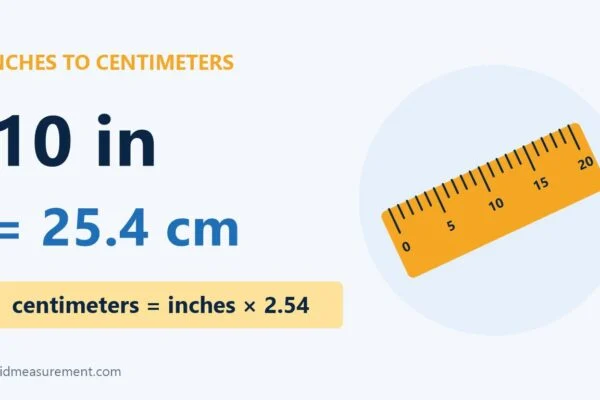
10 Inches to Centimeters: 10 in = 25.4 cm
10 inches equals 25.4 centimeters. Get the formula, a 6-14 inch table, everyday 10 inch objects and a quick mental method.

170 cm to Feet and Inches: 5 ft 6.9 in
170 centimeters equals 5 feet 6.9 inches. See the cm to feet formula, a 160-185 cm height chart and an easy 5-foot anchor trick.
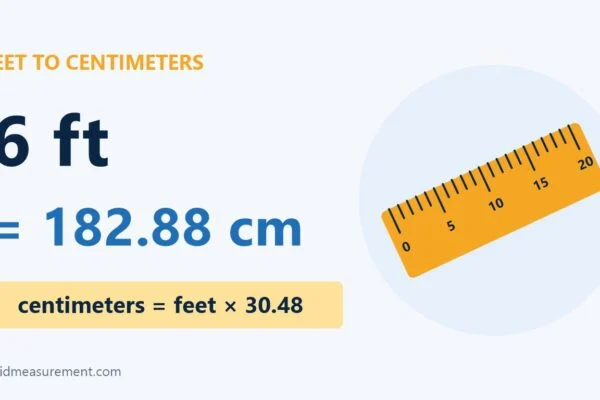
6 Feet to Centimeters: 6 ft = 182.88 cm
6 feet equals 182.88 centimeters. Get the formula, a 6 ft 0 in to 6 ft 5 in height chart in cm and a simple way to convert feet and inches.