How Much Does a Horse Weigh? (By Breed)

How Much Does a Horse Weigh?

Most adult horses weigh somewhere between 900 and 1,200 pounds (roughly 400 to 550 kg). But that “average” hides a huge range. A Shetland pony and a Shire draft horse can differ in weight by nearly 2,000 pounds, even though both are technically horses. For a general reference, see the Wikipedia entry on horses.
The honest answer is: it depends entirely on breed, age, and build. Below is a full breakdown so you can find the number that actually applies to the horse you’re asking about.
Horse Weight by Breed
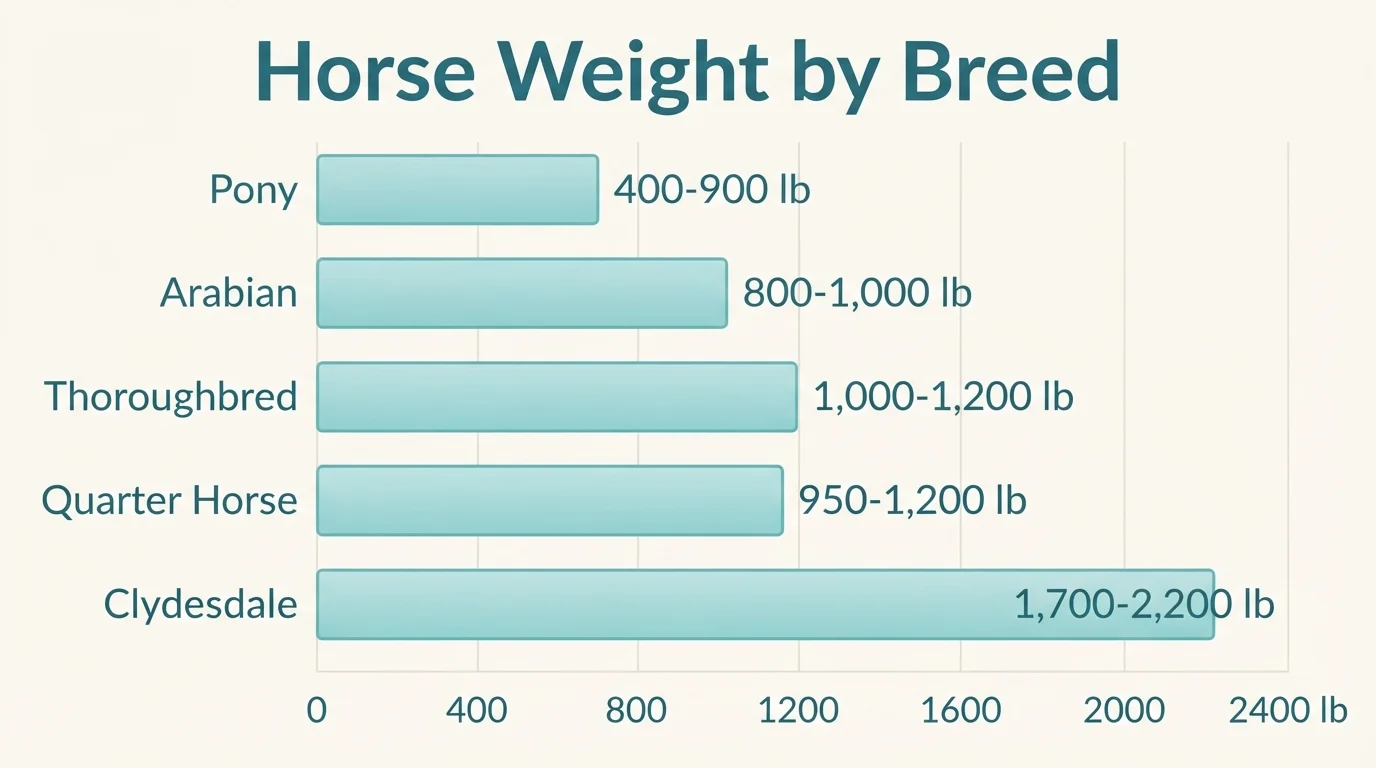
Here’s how weight typically breaks down across common breeds and types:
| Breed / Type | Typical Weight (lb) | Typical Weight (kg) |
|---|---|---|
| Miniature Horse | 150 – 350 | 68 – 160 |
| Pony (general) | 400 – 900 | 180 – 410 |
| Arabian | 800 – 1,000 | 360 – 450 |
| Thoroughbred | 1,000 – 1,200 | 450 – 545 |
| Quarter Horse | 950 – 1,200 | 430 – 545 |
| Warmblood | 1,200 – 1,500 | 545 – 680 |
| Percheron | 1,800 – 2,100 | 815 – 950 |
| Clydesdale | 1,700 – 2,200 | 770 – 1,000 |
| Belgian Draft | 1,800 – 2,200 | 815 – 1,000 |
| Shire | 1,800 – 2,400 | 815 – 1,090 |
Notice the pattern: light riding breeds like Arabians and Thoroughbreds sit close together, while draft breeds bred for pulling heavy loads are nearly double the weight.
How Much Does a Pony Weigh?
A pony is defined by height, not weight — anything under 14.2 hands (about 58 inches) at the shoulder. Most ponies land between 400 and 900 pounds. A Shetland, one of the smallest pony breeds, usually stays under 600 pounds. Larger pony breeds, like the Welsh Cob, can approach 900.
How Much Does a Draft Horse Weigh?
Draft horses — Belgians, Clydesdales, Percherons, and Shires — are built for pulling power, not speed. Most weigh 1,700 to 2,400 pounds, and exceptionally large individuals have been recorded well above that.
What Affects a Horse’s Weight?
A horse’s weight isn’t fixed — it shifts based on several factors:
- Age: Foals are born weighing roughly 10% of their mother’s body weight, then grow quickly through their first year.
- Breed and type: Draft, warmblood, light riding, and pony types all carry very different frames.
- Sex: Stallions tend to run slightly heavier than mares of the same breed.
- Height and bone structure: Two horses of the same breed can still differ by hundreds of pounds.
- Diet and conditioning: A horse in hard work or on a rich diet carries more muscle and fat than one on limited pasture.
- Health: Illness, parasites, and dental problems can all cause unexpected weight loss.
How Owners Estimate Weight Without a Scale
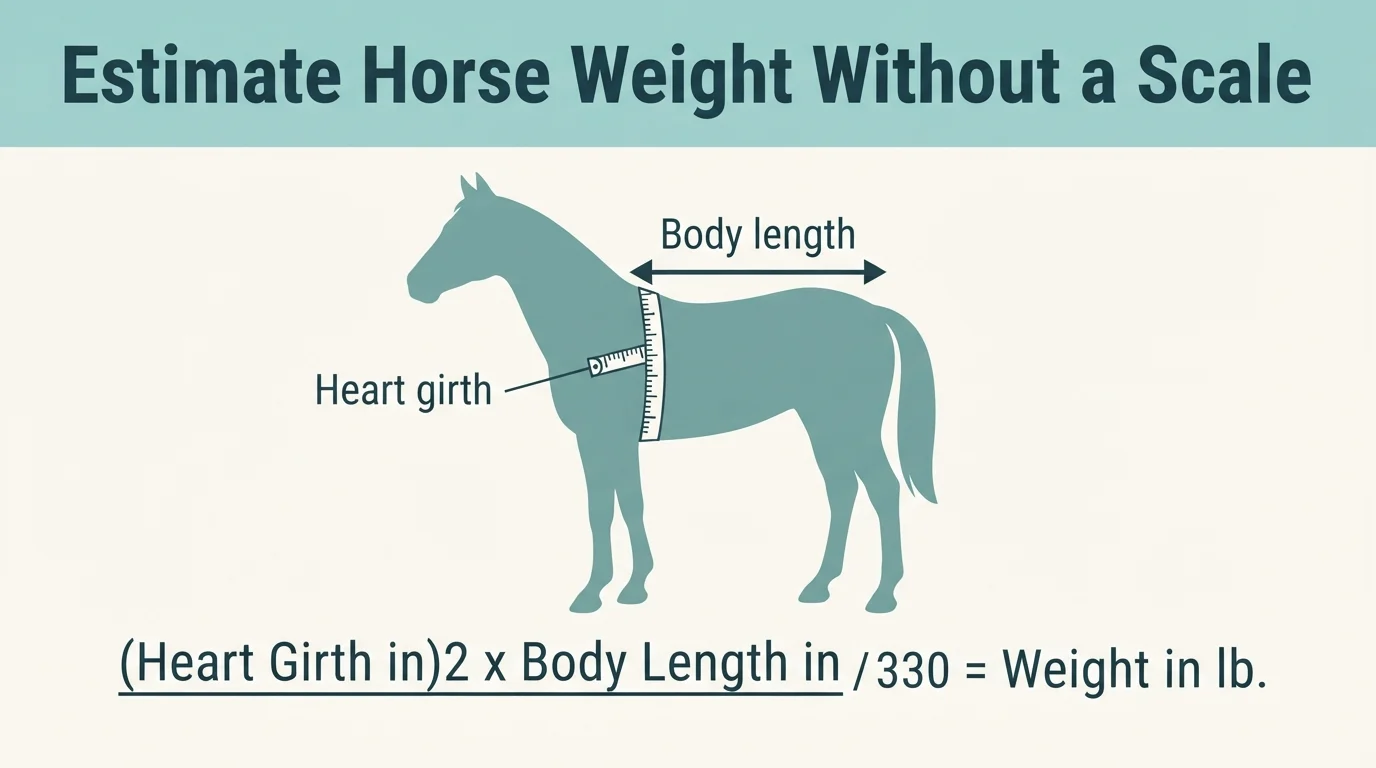
Livestock scales aren’t common at most barns, so owners rely on a simpler method: a weight tape wrapped around the horse’s heart girth, combined with a body-length measurement.
The formula most commonly used is:
Weight (lb) = (Heart Girth in inches)² × Body Length in inches ÷ 330
For example, a horse with a 77-inch heart girth and a 68-inch body length works out to roughly 1,220 pounds — close enough for feeding and general health decisions, even if it’s not scale-accurate.
Many owners also use Body Condition Scoring (BCS), a 1-to-9 visual and hands-on scale that checks fat coverage over the ribs, neck, and tailhead. A score of 5 or 6 is considered ideal for most riding horses.
Why Horse Weight Actually Matters

This isn’t just trivia for horse people — weight drives real decisions:
- Feed amounts: horses generally eat 1.5–2% of their body weight in feed daily.
- Medication dosing: vets calculate almost every dose based on body weight.
- Rider weight limits: a horse should typically carry no more than 15–20% of its own body weight.
- Trailering and tack: trailers, girths, and equipment all have weight ratings that assume a certain horse size.
Worth remembering: what a scale (or weight tape) is really measuring is the pull of gravity on the horse’s mass — the same mass-and-weight relationship that applies to everything else on Earth, humans included.
Frequently Asked Questions
How much does a horse weigh on average?
Most adult horses weigh between 900 and 1,200 pounds, though this varies a lot by breed.
How much does a pony weigh?
Ponies typically weigh 400 to 900 pounds, depending on breed and height.
How much does a draft horse weigh?
Draft horses usually weigh 1,700 to 2,400 pounds, with some large individuals weighing even more.
How can I estimate my horse’s weight without a scale?
Use a weight tape formula: (heart girth in inches)² × body length in inches ÷ 330. It won’t be perfectly precise, but it’s accurate enough for feeding and everyday care.
What unit are horse weights usually given in?
Almost always pounds in the US — see our full guide to the pound for more on this unit.
Related Articles
90 Kilograms to Pounds: 90 kg = 198.42 lb
90 kilograms equals 198.42 pounds. See the formula, a 80-100 kg table, how 90 kg compares with 200 lb, and a simple mental shortcut.
20 Kilograms to Pounds: 20 kg = 44.09 lb
20 kilograms equals 44.09 pounds. Get the formula, a 10-30 kg table, airline baggage tips for a 20 kg limit and a quick mental shortcut.
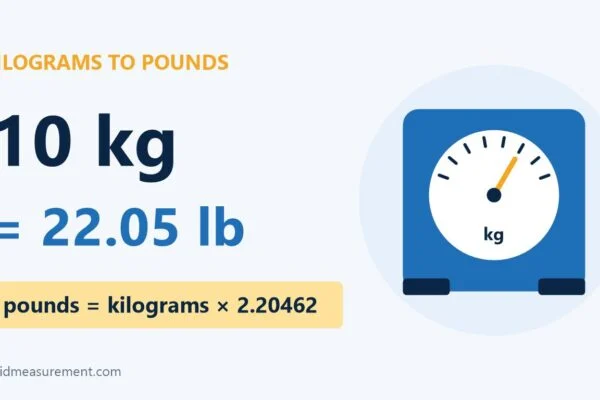
10 Kilograms to Pounds: 10 kg = 22.05 lb
10 kilograms equals 22.05 pounds. See the formula, a 5-15 kg table, what weighs 10 kg and how to stay under a 10 kg cabin bag limit.
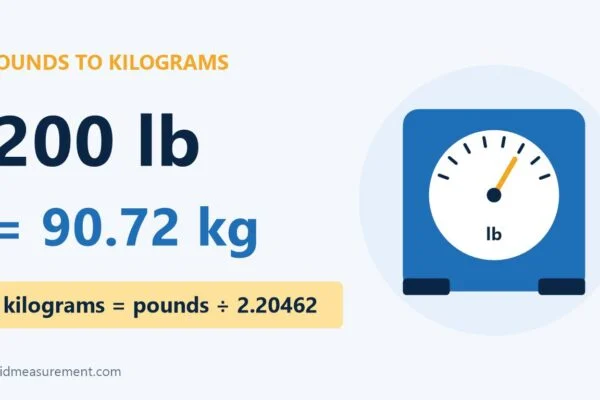
200 Pounds to Kilograms: 200 lb = 90.72 kg
200 pounds equals 90.72 kilograms. Get the formula, a 180-220 lb table, ladder and boxing limits, and a quick mental estimate.