What Is a Pound?

What Is a Pound?
A pound (lb) is the standard unit of weight in the US customary system, equal to 16 ounces or about 453.6 grams. It’s the everyday unit Americans use for body weight, groceries, and general weight measurement. For a general reference, see the Wikipedia entry on pound.
How Big Is a Pound?

A pound is a moderate, easy-to-feel weight — roughly a loaf of bread, a small laptop charger, or a full water bottle. It’s light enough to hold comfortably but heavy enough to notice.
| Object | Approx. Weight |
|---|---|
| A loaf of sandwich bread | ~1 lb |
| A standard box of pasta | ~1 lb |
| A full 16 oz water bottle | ~1 lb |
| A block of butter (4 sticks) | 1 lb |
Where the Pound Comes From
The word “pound” comes from the Latin phrase libra pondo, meaning “a pound by weight” — which is also why the abbreviation “lb” doesn’t match the English word at all; it comes straight from libra, the Roman unit of weight. The modern pound was formally standardized in 1959 alongside the inch, foot, and yard, fixed at exactly 0.45359237 kilograms.
Pounds Compared to Other Units

- 1 lb = 16 ounces — see our full pounds vs. ounces comparison.
- 1 lb ≈ 0.453592 kilograms — detailed in our 100 kg to pounds guide.
- 1 lb = 453.6 grams — see our guide to the gram for the metric comparison.
Common Pound Conversions
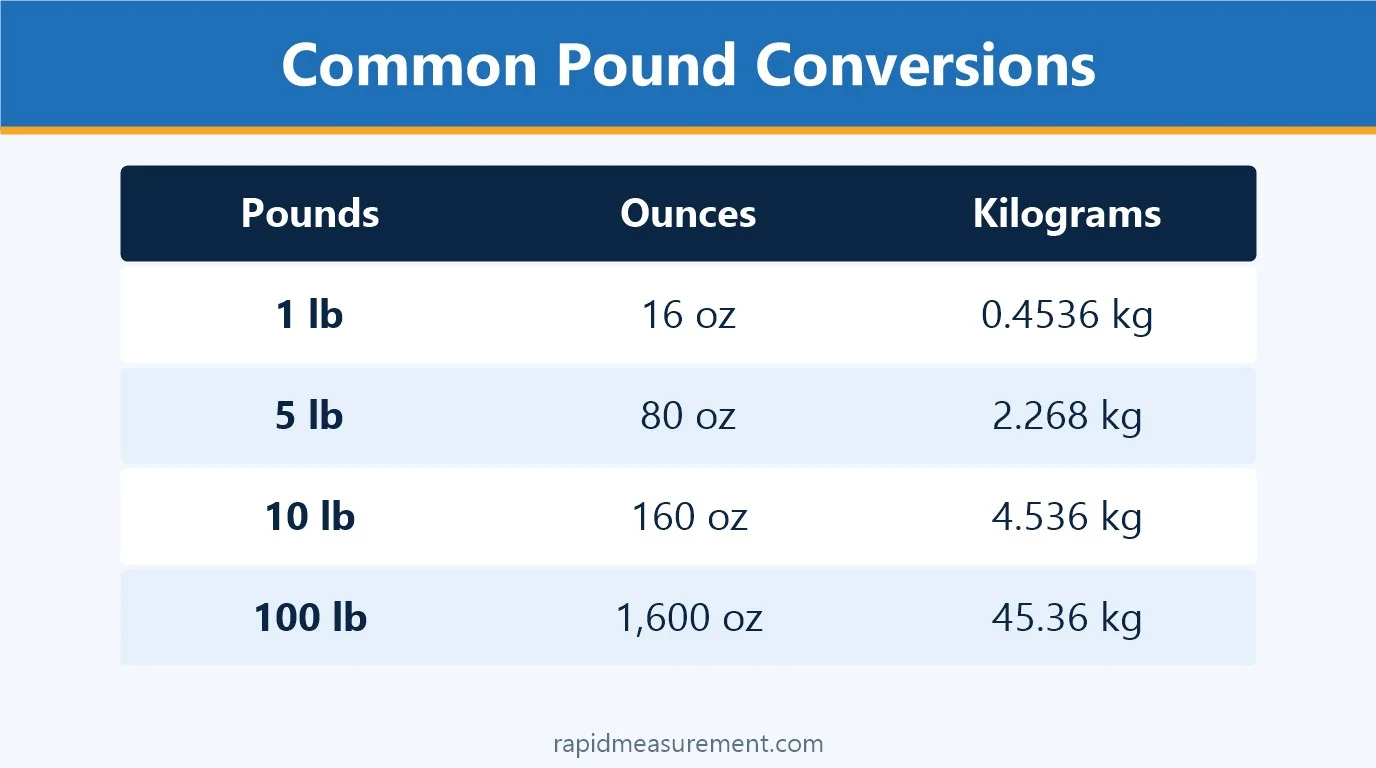
| Pounds | Ounces | Kilograms |
|---|---|---|
| 1 lb | 16 oz | 0.45 kg |
| 5 lb | 80 oz | 2.27 kg |
| 10 lb | 160 oz | 4.54 kg |
| 100 lb | 1,600 oz | 45.36 kg |
Pounds in Everyday Use

- Body weight: Americans typically describe adult body weight in pounds rather than kilograms.
- Groceries: Meat, produce, and bulk goods in the US are priced and sold by the pound.
- Shipping: US postal and freight rates are calculated using pounds.
- Fitness: American gym equipment and weightlifting plates are labeled in pounds.
The Pound Sign vs. the Pound Unit
The “#” symbol is sometimes called the “pound sign” in the US, a naming holdover from its historical use as an abbreviation for “pounds” in shorthand (as in “5# of flour”). This is unrelated to the British currency also called the pound, which uses the £ symbol instead — two completely different meanings sharing the same English word.
Pounds in Specific Fields
- Boxing and combat sports: US weight classes are defined in pounds, unlike most international federations that use kilograms.
- Agriculture: US crop yields and livestock weights are commonly reported in pounds.
- Fitness and strength training: American gym culture, from barbell plates to protein serving sizes, is built around pounds.
- Firearms and ammunition: Bullet and gunpowder weights in the US are specified in grains, a unit historically defined as a fraction of a pound.
A Brief History of the Pound
The pound traces back through Roman weight standards, inherited and modified by English tradition over centuries before reaching its modern form. Different versions existed for different purposes historically — a “troy pound” for precious metals and coinage, and an “avoirdupois pound” for general trade — with the avoirdupois version becoming the everyday standard used today. Like the inch, foot, and yard, the modern pound was fixed permanently in 1959 by international agreement at exactly 0.45359237 kilograms.
Why the US Kept Pounds for Body Weight
Body weight is one of the most personally familiar measurements people track, and changing the unit people use to describe their own weight carries an emotional and habitual weight (so to speak) beyond pure practicality. Even countries that fully adopted the metric system decades ago sometimes retain older units informally for body weight in casual conversation — the UK’s continued use of “stone” (14 lb) alongside official metric measurements is a similar example of a deeply personal measurement resisting full standardization.
Frequently Asked Questions
What is a pound?
A pound is a unit of weight equal to 16 ounces, or about 453.6 grams.
How many ounces are in a pound?
There are exactly 16 ounces in one pound.
How many grams are in a pound?
There are approximately 453.6 grams in one pound.
Why does “lb” abbreviate “pound”?
Because it comes from the Latin word libra, the Roman unit of weight the pound descended from, even though the English word “pound” itself comes from a different root.
Is a pound a unit of weight or mass?
In everyday use, it’s treated as weight, though it’s technically standardized against a fixed mass (0.45359237 kg) — the same everyday blending of the two concepts that applies to the kilogram as well.
How many pounds are in a US ton?
There are 2,000 pounds in one US (short) ton.
Is a UK ton the same as a US ton?
No. A UK (long) ton is 2,240 pounds, while a US (short) ton is 2,000 pounds — a difference of 240 pounds between the two.
How many pounds does a gallon of water weigh?
About 8.34 pounds, a figure commonly used as a rough benchmark in plumbing and water-related calculations.
Is a pound heavier in the UK than in the US?
No. The avoirdupois pound used for everyday weight is identical in both countries — 453.6 grams — even though other units like the ton differ between them.
Why do boxers compete in pound-based weight classes in the US?
Because American combat sports organizations built their weight class structures around pounds from their earliest formal rules, and the tradition has been preserved even as many international federations moved to kilogram-based classes.
Avoirdupois vs. Troy: Two Historical Pound Systems
Before the avoirdupois pound became the universal everyday standard, a separate “troy pound” (used for precious metals and coinage) coexisted alongside it, defined slightly differently and divided into 12 troy ounces rather than 16 avoirdupois ounces. The troy system has mostly faded from general use, but its ounce survives prominently in precious metals trading, creating one of the more confusing overlaps in the English measurement tradition — two different “ounces” both descending from pound-based systems, but not from the same pound.
The Pound in International Trade Today
Even as most of the world conducts trade in metric tons and kilograms, pound-denominated pricing persists in specific US-dominated commodity markets — cotton, cattle, and certain agricultural futures are still frequently quoted per pound on American exchanges, influencing global pricing conventions in those specific sectors regardless of which measurement system the buyer or seller’s home country officially uses.
Pounds and the Body-Weight Conversation
Because pounds are the primary way Americans discuss body weight, US health guidelines, medical charts, and fitness culture are built almost entirely around pound-based benchmarks — a BMI calculator, a doctor’s chart, or a gym’s recommended weight range will typically default to pounds for an American audience, even though the BMI formula itself is defined using kilograms and meters underneath.
Why Pound-Based Recipes Confuse International Cooks
An American recipe calling for “1 lb of ground beef” requires an extra conversion step for a cook working in a kilogram-based kitchen, since 1 lb doesn’t correspond to a clean metric round number (it’s about 0.45 kg). This small friction is one of the more common everyday reasons recipe websites increasingly list ingredient weights in both units side by side, acknowledging that their audience spans both measurement traditions.
Is there a dedicated guide to the ounce?
Yes — see our full guide to the ounce for its history and the different types of ounces.
Related Articles
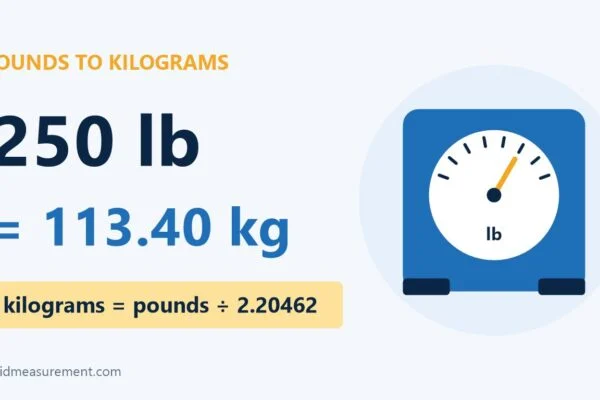
250 Pounds to Kilograms: 250 lb = 113.4 kg
250 pounds equals 113.4 kilograms. See the formula, a 200-300 lb table, chair and gym equipment limits, and a quick way to estimate it.
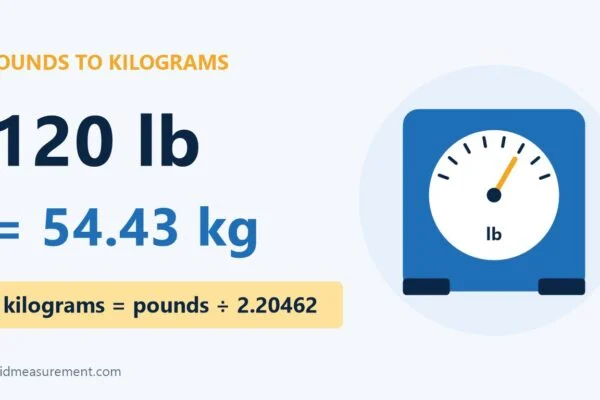
120 Pounds to Kilograms: 120 lb = 54.43 kg
120 pounds equals 54.43 kilograms. Get the lb to kg formula, a 100-140 lb table, body weight and boxing context, and an easy estimate.
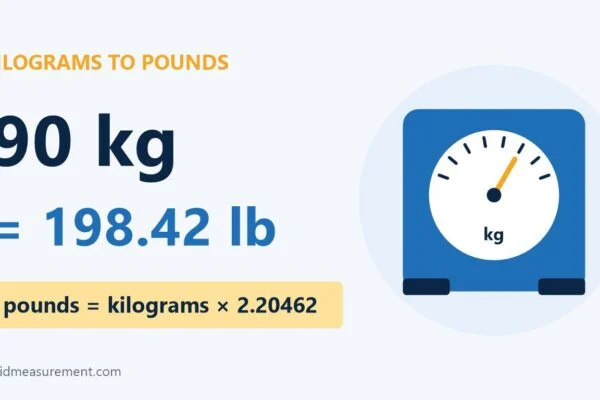
90 Kilograms to Pounds: 90 kg = 198.42 lb
90 kilograms equals 198.42 pounds. See the formula, a 80-100 kg table, how 90 kg compares with 200 lb, and a simple mental shortcut.
20 Kilograms to Pounds: 20 kg = 44.09 lb
20 kilograms equals 44.09 pounds. Get the formula, a 10-30 kg table, airline baggage tips for a 20 kg limit and a quick mental shortcut.