What Is a Kilogram?

What Is a Kilogram?
A kilogram (kg) is the base unit of mass in the metric (SI) system, equal to 1,000 grams or about 2.2 pounds. It’s the standard unit for body weight, groceries, and general mass measurement in most of the world. For a general reference, see the Wikipedia entry on kilogram.
How Big Is a Kilogram?

A kilogram is a substantial, easy-to-feel weight — roughly a liter of water, a small bag of sugar, or a hardcover book. Most kitchen and bathroom scales are calibrated primarily around kilograms outside the US.
| Object | Approx. Weight |
|---|---|
| 1 liter of water | ~1 kg |
| Small bag of sugar | 1 kg |
| Hardcover book | ~1 kg |
| A liter-sized carton of milk | ~1.03 kg |
Where the Kilogram Comes From
The kilogram is unique among SI base units for its unusual history — it was originally defined by a physical platinum-iridium cylinder kept in France, nicknamed “Le Grand K,” which served as the literal physical standard for over a century. In 2019, scientists redefined the kilogram using a fixed value of the Planck constant, removing the need for any physical object and making the definition permanently precise and universally reproducible.
Kilograms Compared to Other Units

- 1 kg = 1,000 grams — see our full guide to the gram.
- 1 kg ≈ 2.20462 pounds — detailed in our 100 kg to pounds guide.
- 1 kg = 0.001 metric tons — used for very large masses like vehicles or shipping cargo.
Common Kilogram Conversions
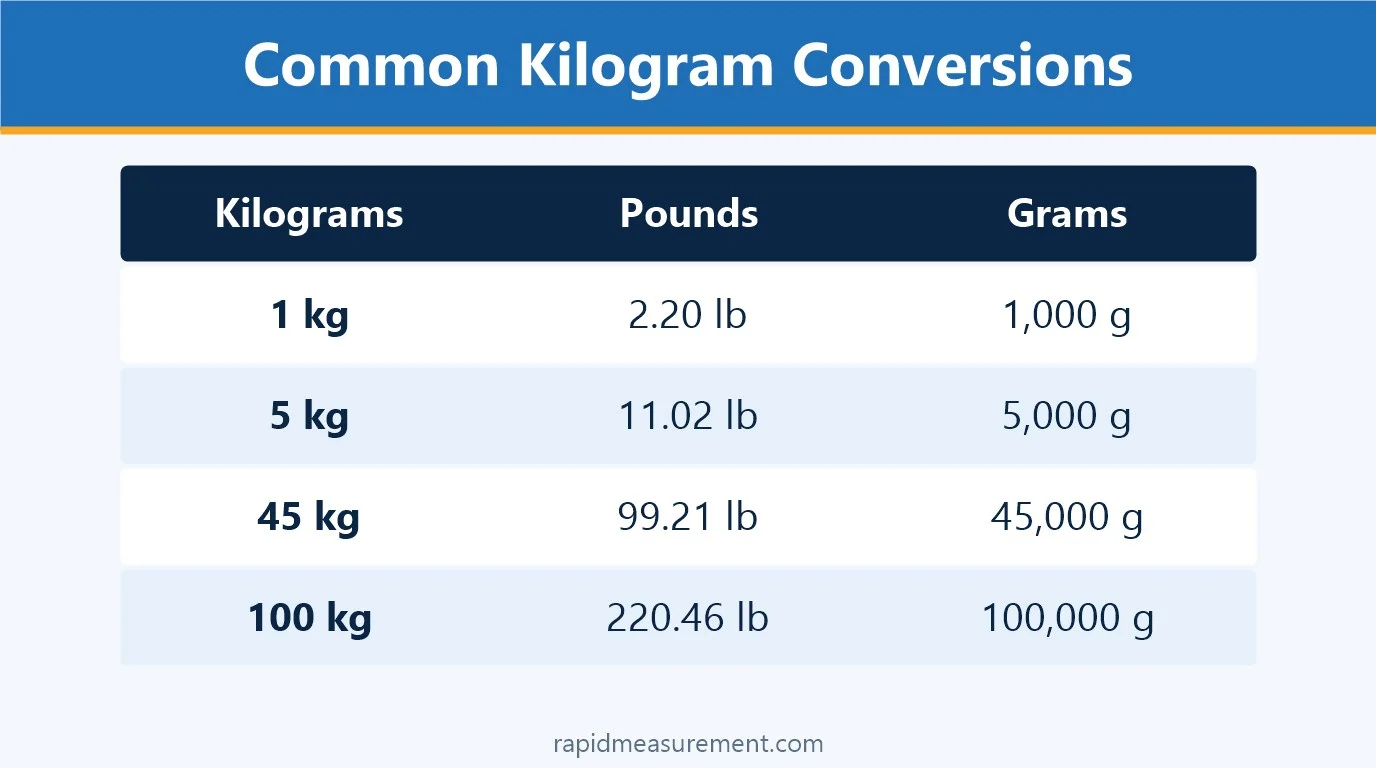
| Kilograms | Pounds | Grams |
|---|---|---|
| 1 kg | 2.20 lb | 1,000 g |
| 5 kg | 11.02 lb | 5,000 g |
| 45 kg | 99.21 lb | 45,000 g |
| 100 kg | 220.46 lb | 100,000 g |
Kilograms in Everyday Use
- Body weight: Most of the world records adult body weight in kilograms rather than pounds.
- Groceries: Produce and bulk goods are priced and sold by the kilogram outside the US.
- Luggage: International airlines set checked-baggage weight limits in kilograms.
- Fitness: Gym equipment and weightlifting plates outside the US are labeled in kilograms.
Why the Kilogram Redefinition Mattered
Retiring the physical kilogram cylinder wasn’t just a technical curiosity — physical objects can gain or lose microscopic amounts of mass over time from cleaning, handling, or environmental exposure, which meant the “official” kilogram could theoretically drift ever so slightly. Tying the definition to a fundamental constant of physics instead means the kilogram will never again depend on the condition of a single object sitting in a vault.
Kilograms in Specific Fields
- Medicine dosing: Drug doses are frequently calculated per kilogram of patient body weight, making the kilogram central to safe prescribing worldwide.
- Shipping and freight: International cargo weight limits and pricing are calculated in kilograms almost everywhere except the US.
- Sports: Weightlifting and combat sports weight classes outside the US are defined in kilograms.
- Scientific research: The kilogram anchors force and energy calculations throughout physics, since it’s the SI base unit mass sits on.
Le Grand K: The Kilogram’s Unusual History
For over 130 years, the entire world’s kilogram measurements traced back to a single physical object: a platinum-iridium cylinder kept under multiple protective domes at the International Bureau of Weights and Measures near Paris, nicknamed “Le Grand K.” Countries maintained their own official copies calibrated against this one master cylinder, periodically shipping them back to France for comparison. Concerningly, over the decades, Le Grand K and its copies showed microscopic but measurable drift relative to each other — a problem impossible to fully diagnose since there was no more fundamental standard to check against.
The 2019 Redefinition

In May 2019, the kilogram’s definition changed permanently: instead of a physical object, it’s now defined using a fixed numerical value of the Planck constant, a fundamental constant of quantum physics, measured using an extremely precise instrument called a Kibble balance. This means the kilogram can now be verified independently anywhere in the world with the right equipment, without ever needing to compare against a single object in France again — arguably the most significant change to the metric system since its creation.
Frequently Asked Questions
What is a kilogram?
A kilogram is the base SI unit of mass, equal to 1,000 grams or about 2.2 pounds.
How many grams are in a kilogram?
There are exactly 1,000 grams in one kilogram.
How many pounds are in a kilogram?
There are approximately 2.20462 pounds in one kilogram.
Is a kilogram a unit of weight or mass?
Mass. Technically, weight is a force that depends on gravity, while a kilogram measures a fixed amount of matter that doesn’t change with location.
Why was the kilogram redefined in 2019?
To remove reliance on a single physical object (a metal cylinder) that could theoretically change mass over time, replacing it with a fixed physical constant that never varies.
How many kilograms are in a metric ton?
There are 1,000 kilograms in one metric ton.
How is the modern kilogram actually measured?
Using a Kibble balance, a highly sensitive instrument that compares mechanical force against an equivalent electromagnetic force, calculated from fixed physical constants rather than compared against a physical reference object.
How many kilograms does a liter of milk weigh?
About 1.03 kg, slightly more than a liter of water due to milk’s slightly higher density.
Is the kilogram used in outer space?
Yes, but only as a measure of mass, not weight — astronauts and spacecraft components still carry a fixed kilogram mass even in zero-gravity conditions, where they would have no measurable weight at all.
Why the Kilogram Redefinition Took So Long
Scientists had suspected problems with the physical kilogram standard for decades before the 2019 change, but replacing it required developing measurement technology precise enough to define mass from fundamental constants rather than a physical artifact — a genuinely difficult engineering challenge that took years of refinement to achieve the necessary accuracy. The delay wasn’t bureaucratic caution; it reflected how hard it is to measure something as fundamental as mass without ultimately relying on an object that could, in principle, change.
The Kilogram’s Everyday Stability
Despite this dramatic behind-the-scenes redefinition, nothing about how people use the kilogram in daily life changed even slightly — a kilogram of flour weighed the same the day before the redefinition as the day after. This is intentional: the entire point of the 2019 change was to make the definition more precise and permanent without disrupting any of the trillions of everyday kilogram measurements happening worldwide.
Kilograms and International Grocery Pricing
Produce and bulk goods priced “per kilogram” is the default worldwide outside the US, meaning a single kilogram price tag has to work sensibly across items as different as flour, apples, and cheese. This is one of the more mundane but genuinely universal everyday encounters with the kilogram — most of the world’s population interacts with kilogram-based pricing at a grocery store far more often than they think about the unit’s underlying scientific definition.
Why Airlines Weigh Luggage in Kilograms
International baggage allowances are almost universally set in kilograms, even for flights departing from or arriving in the US, because airlines operate globally and need one consistent standard across every route. This means American travelers flying internationally often encounter kilogram-based weight limits for the first time specifically through air travel, even if they otherwise rarely think in metric terms.
Is there a dedicated guide to the gram?
Yes — see our full guide to the gram, the kilogram’s smaller metric sibling.
Related Articles
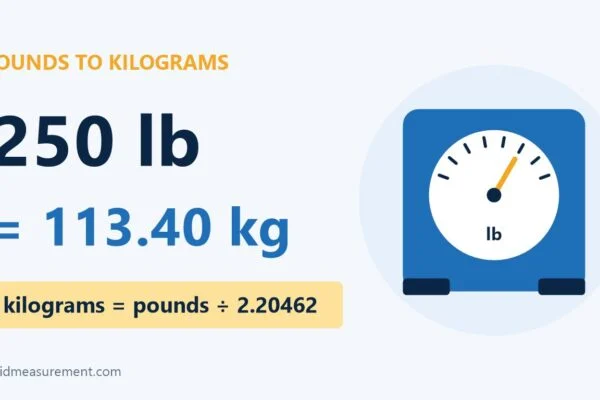
250 Pounds to Kilograms: 250 lb = 113.4 kg
250 pounds equals 113.4 kilograms. See the formula, a 200-300 lb table, chair and gym equipment limits, and a quick way to estimate it.
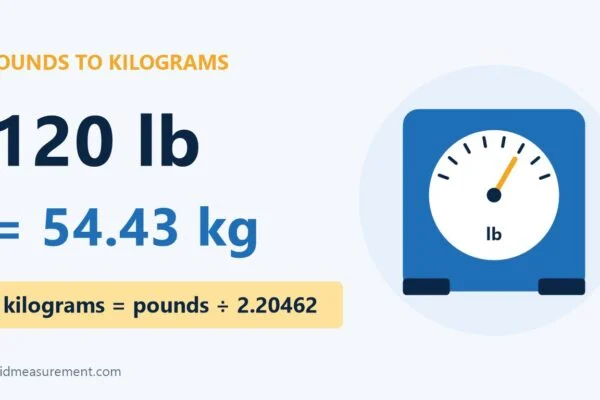
120 Pounds to Kilograms: 120 lb = 54.43 kg
120 pounds equals 54.43 kilograms. Get the lb to kg formula, a 100-140 lb table, body weight and boxing context, and an easy estimate.
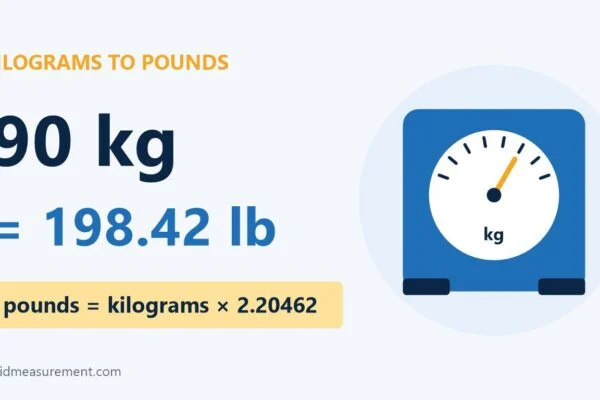
90 Kilograms to Pounds: 90 kg = 198.42 lb
90 kilograms equals 198.42 pounds. See the formula, a 80-100 kg table, how 90 kg compares with 200 lb, and a simple mental shortcut.
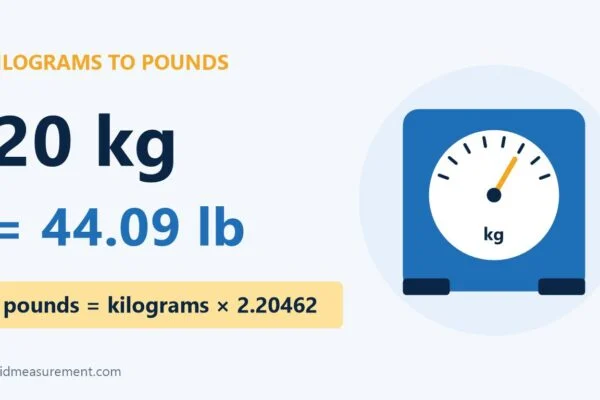
20 Kilograms to Pounds: 20 kg = 44.09 lb
20 kilograms equals 44.09 pounds. Get the formula, a 10-30 kg table, airline baggage tips for a 20 kg limit and a quick mental shortcut.