What Is a Gram?

What Is a Gram?
A gram (g) is a metric unit of mass equal to one-thousandth of a kilogram. It’s the go-to unit for small, everyday quantities — a pinch of salt, a vitamin tablet, or a small piece of jewelry. For a general reference, see the Wikipedia entry on gram.
How Big Is a Gram?
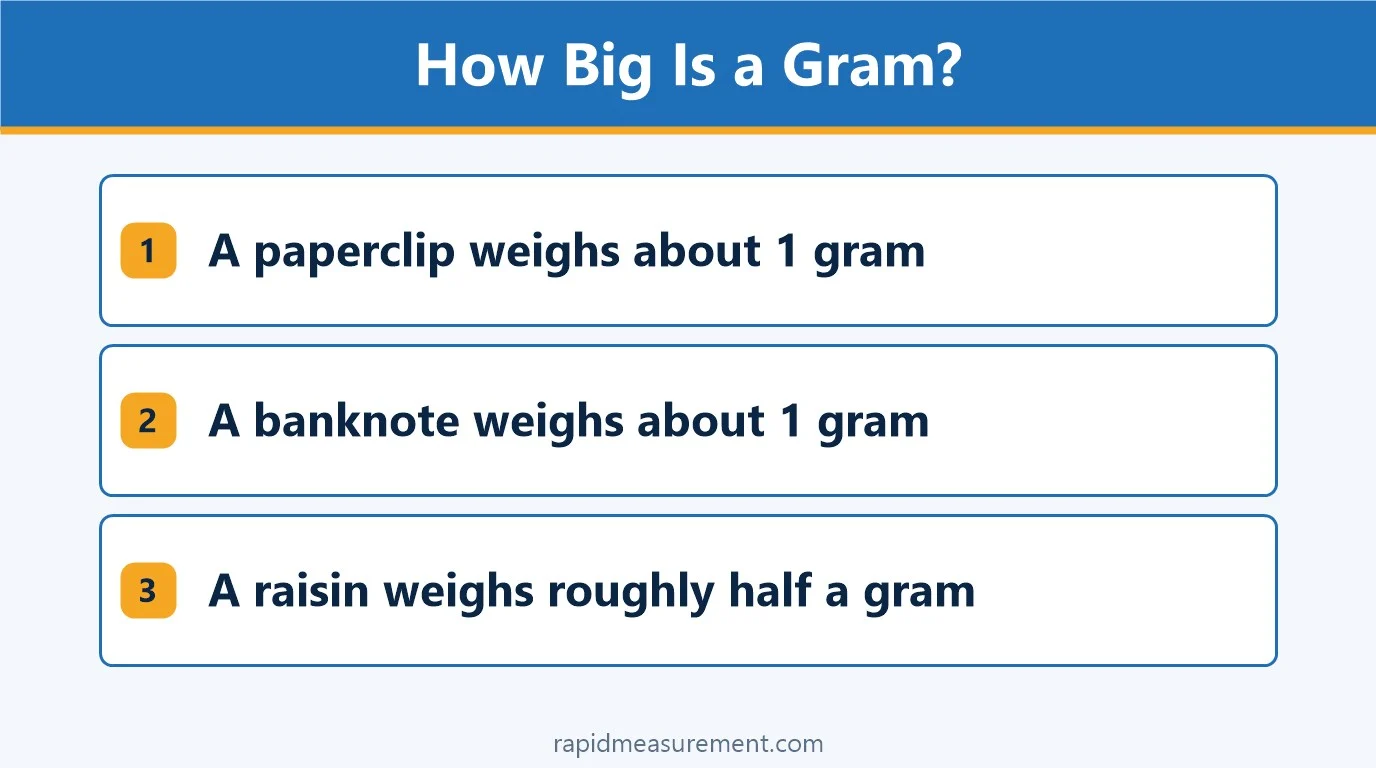
A gram is light — about the weight of a paperclip, a small coin, or a single raisin. It’s small enough that most kitchen and postal scales are calibrated to register it precisely.
| Object | Approx. Weight |
|---|---|
| Paperclip | ~1 g |
| US dollar bill | ~1 g |
| Raisin | ~1 g |
| Sugar packet | ~3-4 g |
Grams Compared to Other Units
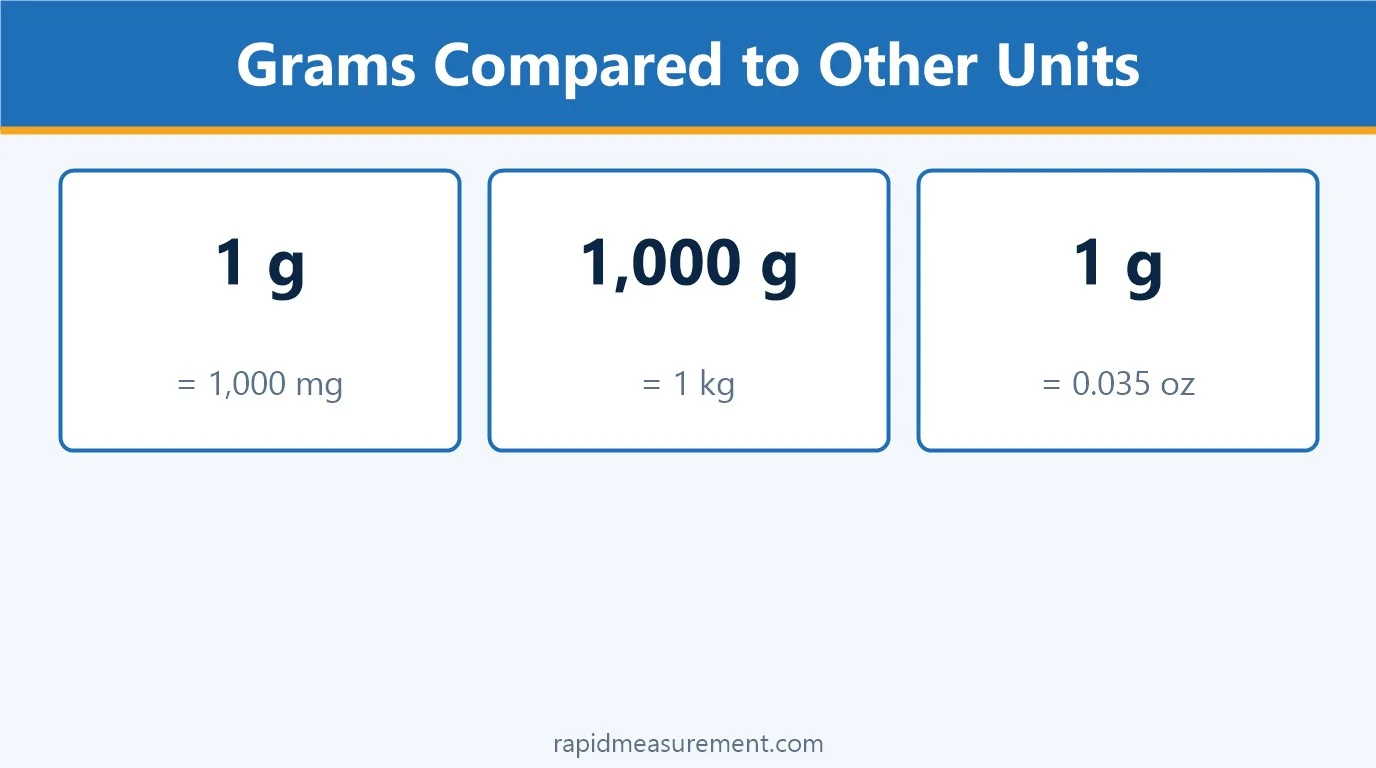
- 1 g = 0.001 kilograms — 1,000 grams make a kilogram; see our full guide to the kilogram.
- 1 g = 1,000 milligrams — used for very small, precise amounts like medication doses.
- 1 g ≈ 0.035 ounces — a gram is much smaller than a standard ounce.
Grams are also often confused with milliliters, since 1 mL of water happens to weigh exactly 1 gram — but that’s a water-specific coincidence, not a general rule, as explained in our grams vs. milliliters guide.
Common Gram Conversions
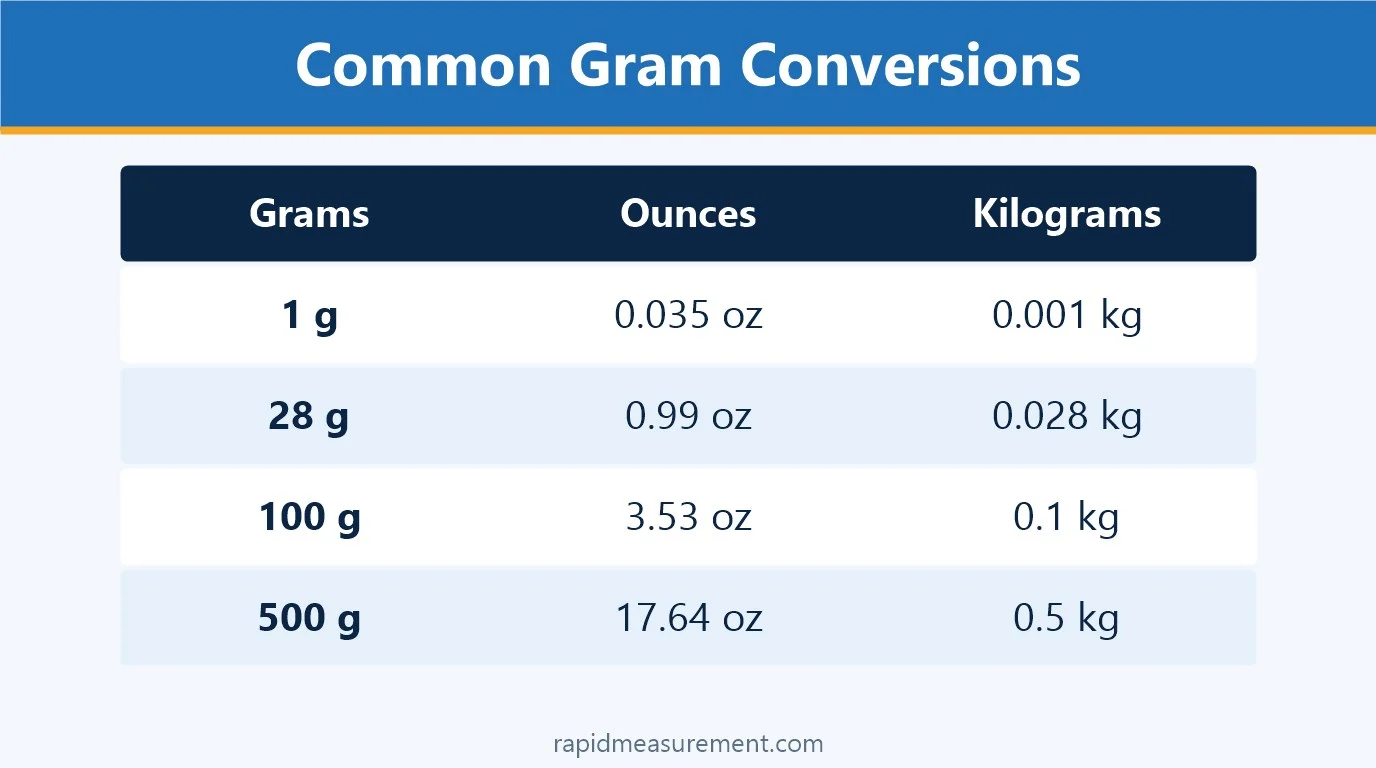
| Grams | Ounces | Kilograms |
|---|---|---|
| 1 g | 0.035 oz | 0.001 kg |
| 28 g | ~1 oz | 0.028 kg |
| 100 g | 3.53 oz | 0.1 kg |
| 500 g | 17.6 oz | 0.5 kg |
Grams in Everyday Use
- Cooking and baking: Recipes outside the US measure ingredients by weight in grams for consistency.
- Nutrition labels: Protein, fat, and carbohydrate content is listed in grams on packaging worldwide.
- Jewelry: Small precious items are often weighed in grams (though gold and silver traditionally use troy ounces).
- Medicine: Many medications are dosed in milligrams, a subdivision of the gram, for precise small quantities.
Why Bakers Prefer Grams Over Cups

Professional bakers overwhelmingly weigh ingredients in grams rather than measuring by volume (cups, tablespoons), because weight is far more consistent — a “cup of flour” can vary significantly depending on how it’s packed, while 120 grams of flour is 120 grams no matter how it’s scooped. This is one of the clearest practical arguments for gram-based measurement in a kitchen setting.
Grams in Specific Fields
- Pharmacy: Bulk medication compounding often uses grams, while individual doses drop to milligrams.
- Coffee brewing: Specialty coffee culture has widely adopted gram-based ratios (like a 1:16 coffee-to-water ratio) for consistency.
- 3D printing: Filament usage is tracked in grams to estimate material cost per print.
- Scientific research: Lab measurements of chemicals and samples are almost universally in grams or milligrams, even in US institutions.
A Brief History of the Gram
The gram was originally defined in the 1790s as the mass of one cubic centimeter of water at a specific temperature — a clean, reproducible physical reference that fit the metric system‘s broader design philosophy of deriving units from natural, universal constants rather than arbitrary objects. The kilogram, not the gram, eventually became the official SI base unit for mass, with the gram simply defined as one-thousandth of it, but the original water-based logic is still a useful way to understand where the whole system’s mass definitions started.
Why Digital Kitchen Scales Changed Home Cooking
The growing availability of cheap, accurate digital kitchen scales has pushed gram-based cooking well beyond professional bakeries and into home kitchens, especially for baking recipes shared online. A recipe written in grams travels perfectly between any two kitchens in the world, while a recipe written in cups depends on assumptions about cup size, ingredient density, and packing technique that can vary significantly between cooks.
Frequently Asked Questions
What is a gram?
A gram is a metric unit of mass equal to one-thousandth of a kilogram.
How many grams are in a kilogram?
There are exactly 1,000 grams in one kilogram.
How many grams are in an ounce?
There are approximately 28.35 grams in one ounce.
Is a gram the same as a milliliter?
Only for water. For other substances, a gram and a milliliter represent different amounts because they depend on density.
Why do bakers weigh ingredients in grams instead of cups?
Because weight is more precise and consistent than volume — a scooped cup of flour can vary by weight depending on how tightly it’s packed, while a gram measurement never changes.
How many milligrams are in a gram?
There are exactly 1,000 milligrams in one gram.
Why was the gram originally defined using water?
Because water was a universally available, reproducible substance — defining the gram as the mass of 1 cubic centimeter of water gave every country a way to verify the standard independently, without needing access to a single physical reference object.
Is the gram or the kilogram the official SI base unit?
The kilogram is the official SI base unit for mass, even though it’s built from “grams” in name — the gram is simply defined as one-thousandth of it.
Why is caffeine often measured in milligrams instead of grams?
Because a typical serving (like 95 mg in a cup of coffee) is far smaller than a whole gram, and milligram precision matters for tracking safe daily intake limits.
How many grams are in a US teaspoon of sugar?
About 4 grams, though this varies slightly depending on how tightly the sugar is packed into the spoon — another example of why weight-based measurement is more consistent than volume for granular ingredients.
Do all food scales measure in grams?
Most digital kitchen scales sold internationally can switch between grams and ounces, letting a single device serve both metric and imperial-preference cooks.
Is a gram a good unit for measuring spices?
Yes. Spices are potent in small quantities, so grams (or even fractions of a gram) offer far more useful precision than trying to measure a “pinch” by volume.
How many grams does a standard paperclip weigh?
A standard-size paperclip weighs almost exactly 1 gram, making it one of the most convenient reference objects for visualizing this unit.
Grams and the Rise of Precision Nutrition
The fitness and nutrition tracking movement of the last two decades has pushed gram-level precision into ordinary households in a way that would have seemed excessive a generation earlier — food scales that once belonged only in professional kitchens or labs are now common in homes tracking macronutrients to the gram. This shift reflects how a unit’s everyday relevance can expand dramatically as a culture’s priorities change, even without the unit itself changing at all.
How Postal and Shipping Scales Use Grams
International shipping rates are frequently calculated in weight bands measured in grams for lighter packages, transitioning to kilograms once a parcel crosses a certain threshold. This dual-scale approach — grams for small items, kilograms for larger ones — mirrors how the metric system is designed to be used in practice: the appropriate unit shifts naturally with the size of what’s being measured, without ever requiring an entirely different measurement system.
Grams in Jewelry and Precious Materials
While gold and silver bullion trading uses troy ounces internationally, finished jewelry — rings, necklaces, small charms — is very commonly weighed and priced in grams, especially outside the US. This creates an odd but common situation where the raw metal a piece of jewelry is made from might be priced by the troy ounce on a commodities exchange, while the finished piece itself is weighed and sold by the gram at a retail counter.
Is there a dedicated guide to the kilogram?
Yes — see our full guide to the kilogram, the gram’s larger metric sibling.
Related Articles
250 Pounds to Kilograms: 250 lb = 113.4 kg
250 pounds equals 113.4 kilograms. See the formula, a 200-300 lb table, chair and gym equipment limits, and a quick way to estimate it.
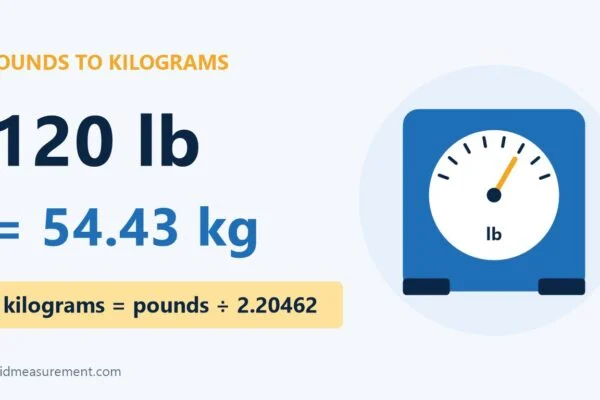
120 Pounds to Kilograms: 120 lb = 54.43 kg
120 pounds equals 54.43 kilograms. Get the lb to kg formula, a 100-140 lb table, body weight and boxing context, and an easy estimate.
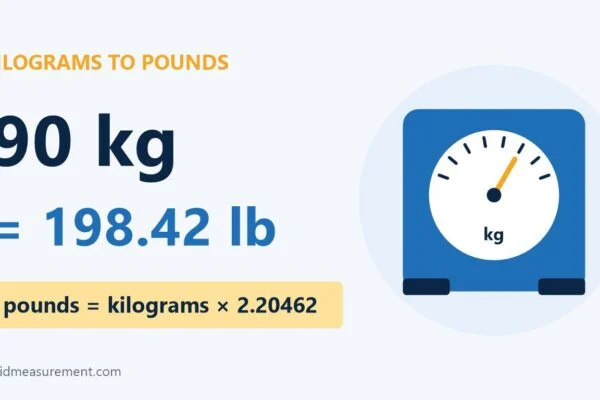
90 Kilograms to Pounds: 90 kg = 198.42 lb
90 kilograms equals 198.42 pounds. See the formula, a 80-100 kg table, how 90 kg compares with 200 lb, and a simple mental shortcut.
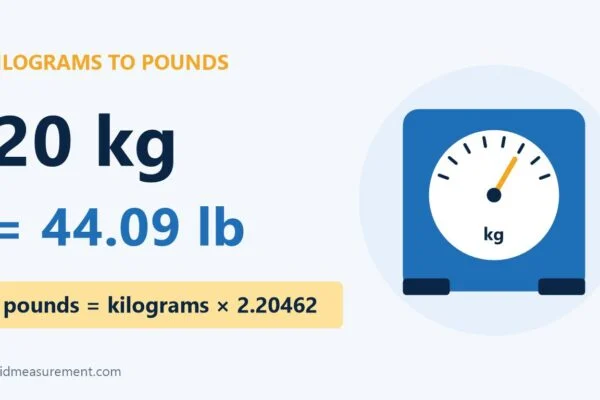
20 Kilograms to Pounds: 20 kg = 44.09 lb
20 kilograms equals 44.09 pounds. Get the formula, a 10-30 kg table, airline baggage tips for a 20 kg limit and a quick mental shortcut.