What Is a Kilometer?

What Is a Kilometer?
A kilometer (km) is a metric unit of length equal to 1,000 meters. It’s the standard unit for longer distances almost everywhere in the world — between cities, along running routes, and on road signs. For a general reference, see the Wikipedia entry on kilometer.
How Big Is a Kilometer?

A kilometer is about the length of 10 football fields laid end to end, or roughly a 12-15 minute walk at a normal pace. It’s long enough that most people can’t visualize it precisely without a reference like a familiar route or landmark.
| Reference | Approx. Distance |
|---|---|
| 10 football fields | ~1 km |
| Walking at normal pace | 12-15 min for 1 km |
| City blocks (varies by city) | ~8-10 blocks |
| Laps around a running track | 2.5 laps |
Where the Kilometer Comes From
The kilometer is a direct multiple of the meter, using the metric “kilo-” prefix that always means 1,000 — the same prefix used in kilogram (1,000 grams) and kilowatt (1,000 watts). It was built into the metric system from its 1790s French origins as a practical way to describe distances longer than a single meter could conveniently express.
Kilometers Compared to Other Units

- 1 km = 1,000 meters — see our full kilometers vs. meters comparison.
- 1 km = 100,000 centimeters — detailed in our centimeters vs. kilometers guide.
- 1 km ≈ 0.621 miles — a kilometer is shorter than a mile.
- 1 km ≈ 3,280.8 feet — useful for comparing to US-style distance measurements.
Common Kilometer Conversions
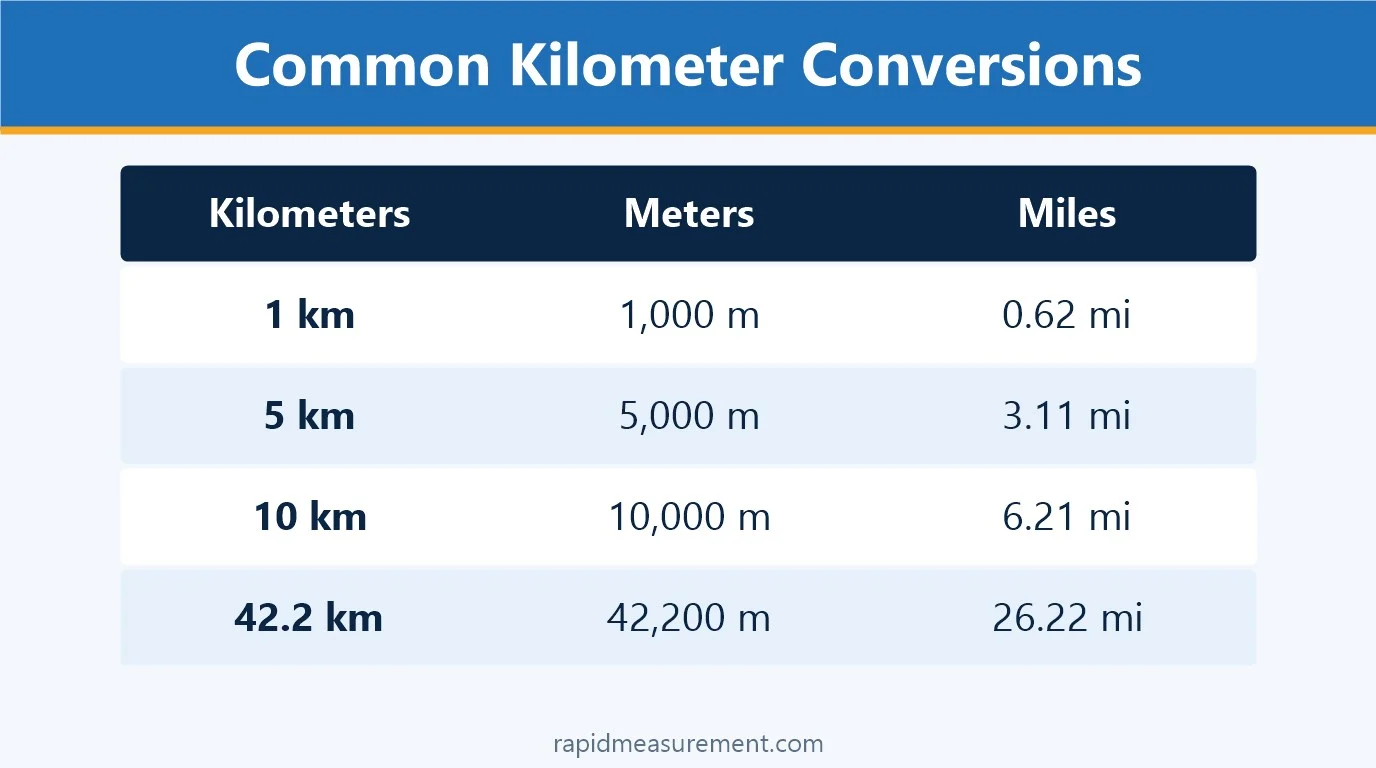
| Kilometers | Meters | Miles |
|---|---|---|
| 1 km | 1,000 m | 0.62 mi |
| 5 km | 5,000 m | 3.11 mi |
| 10 km | 10,000 m | 6.21 mi |
| 42.2 km | 42,200 m | 26.2 mi (marathon) |
Kilometers in Everyday Use
- Road travel: Most of the world uses kilometers on road signs, speed limits, and car odometers instead of miles.
- Running and cycling: Race distances (5K, 10K, marathons) are defined in kilometers internationally.
- Weather: Wind speed and visibility are commonly reported in kilometers per hour or kilometers in metric countries.
- Geography: Country sizes, coastlines, and distances between cities are described in kilometers worldwide.
Kilometers vs. Miles: Why the US Is Different

The United States is one of the few countries that still uses miles instead of kilometers for everyday travel distances, a holdover from the same broader resistance to full metric adoption seen with feet and pounds. A mile (about 1.609 km) is longer than a kilometer, which is why US road trip distances often look like smaller numbers than the equivalent trip described in kilometers elsewhere in the world.
Kilometers in Specific Fields
- Vehicle speed: Speedometers in most of the world display kilometers per hour rather than miles per hour.
- Aviation and shipping: Nautical charts and some flight planning use kilometers alongside nautical miles.
- Astronomy: Distances within the solar system are often expressed in millions of kilometers before switching to light-years for interstellar scales.
- Emergency services: Response radius and search-area planning in metric countries is typically calculated in kilometers.
Why “Kilo” Always Means 1,000
The kilometer is one of the clearest illustrations of how consistently the metric system applies its prefixes. “Kilo-” means exactly 1,000 no matter what it’s attached to — a kilogram is 1,000 grams, a kilowatt is 1,000 watts, a kilobyte (in the strict SI sense) is 1,000 bytes. Once that single prefix rule is understood, it applies universally across the entire system, unlike imperial units, where each unit pairing (inches to feet, feet to yards, yards to miles) has its own unrelated conversion factor to memorize.
How the Kilometer Compares Globally
Of the roughly 200 countries in the world, only a small handful — most notably the United States, Liberia, and Myanmar — have not officially adopted the metric system for everyday use. This means the kilometer, not the mile, is the distance unit the vast majority of the world’s population encounters daily on road signs, weather reports, and maps.
Frequently Asked Questions
What is a kilometer?
A kilometer is a metric unit of length equal to 1,000 meters.
How many meters are in a kilometer?
There are exactly 1,000 meters in one kilometer.
Is a kilometer longer than a mile?
No. A mile is longer — one mile equals about 1.609 kilometers.
How long does it take to walk a kilometer?
At a normal walking pace, most people cover a kilometer in about 12-15 minutes.
How many centimeters are in a kilometer?
There are exactly 100,000 centimeters in one kilometer.
Why do some countries use miles and others use kilometers?
It comes down to which measurement system a country historically adopted — most of the world standardized on the metric system (kilometers), while the US and a few others retained the imperial system (miles) for everyday use.
Which countries don’t use the metric system?
Only a small number of countries, most notably the United States, Liberia, and Myanmar, have not officially adopted the metric system for everyday measurement.
How many kilometers is a typical daily commute?
This varies enormously by location and city density, but urban commutes in most metric countries commonly range from about 5 to 25 kilometers each way.
Is a kilometer a good unit for measuring a hiking trail?
Yes. Kilometers are the standard unit for trail distances in most of the world, typically combined with a separate elevation-gain figure given in meters.
Is a kilometer used in space or astronomy?
Yes, for distances within the solar system — Earth-to-Moon and planetary distances are often expressed in kilometers, before switching to light-years for distances beyond our solar system.
How many kilometers can a car typically drive on a full tank?
This varies widely by vehicle, but many gasoline cars sold in metric countries advertise fuel efficiency in liters per 100 kilometers, a figure used to estimate total range on a full tank.
The Kilometer’s Role in Everyday Route Planning
Modern GPS navigation apps default to kilometers in the vast majority of countries, quietly reinforcing the unit’s dominance in daily route planning even among people who rarely think consciously about which measurement system they’re using. This is one of the more subtle ways the kilometer has become globally entrenched — not through any single decision, but through the accumulated defaults of mapping software, car dashboards, and road infrastructure built consistently around it for decades.
Kilometers and Marathon History
The marathon’s famous 42.195 km distance has an unusually specific origin: it was standardized at the 1908 London Olympics to match the exact distance from Windsor Castle to White City Stadium, plus a short stretch to finish in front of the royal box. That oddly precise imperial-derived distance was later converted to its now-familiar kilometer figure and adopted as the permanent international standard — a rare case of a metric measurement being reverse-engineered from an imperial one, rather than the other way around.
How Kilometers Scale Up to Larger Distances
Beyond everyday travel, kilometers remain useful even at much larger scales before astronomy takes over entirely — the distance around the Earth’s equator (about 40,075 km) and the distance to the Moon (about 384,400 km) are both still comfortably expressed in kilometers, without needing to switch to a specialized astronomical unit. It’s only once distances stretch to other stars and galaxies that kilometers become impractical, giving way to light-years and parsecs instead.
Related Articles
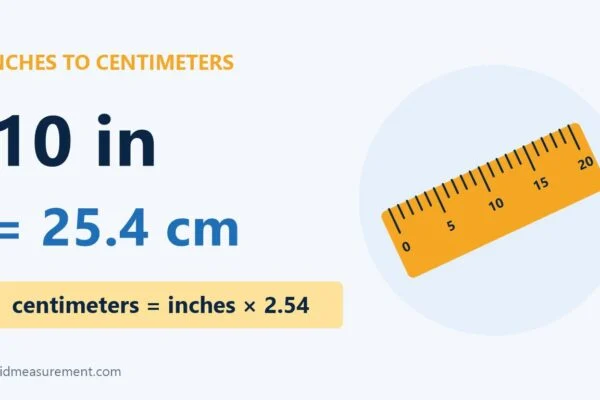
10 Inches to Centimeters: 10 in = 25.4 cm
10 inches equals 25.4 centimeters. Get the formula, a 6-14 inch table, everyday 10 inch objects and a quick mental method.

170 cm to Feet and Inches: 5 ft 6.9 in
170 centimeters equals 5 feet 6.9 inches. See the cm to feet formula, a 160-185 cm height chart and an easy 5-foot anchor trick.
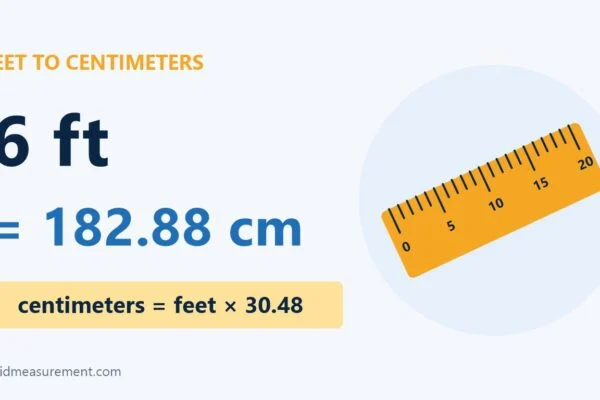
6 Feet to Centimeters: 6 ft = 182.88 cm
6 feet equals 182.88 centimeters. Get the formula, a 6 ft 0 in to 6 ft 5 in height chart in cm and a simple way to convert feet and inches.
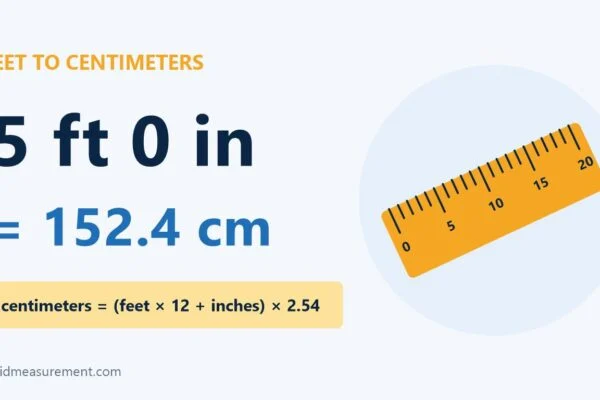
5 Feet to Centimeters: 5 ft = 152.4 cm
5 feet equals 152.4 centimeters. Get the formula, a full 5 ft 0 in to 5 ft 11 in height chart in cm, and an easy way to convert heights.