What Is an Inch?

What Is an Inch?
An inch (in) is a unit of length in the US customary and British imperial systems, equal to 1/12 of a foot or exactly 2.54 centimeters. It’s the standard small-scale unit for measuring everything from screen sizes to screw lengths in countries that use the imperial system. For a general reference, see the Wikipedia entry on inch.
How Big Is an Inch?

An inch is about the length of the last joint of an adult thumb — a rough estimate many people use in a pinch when a ruler isn’t handy. It’s also roughly the width of a standard matchbox or three stacked quarters.
| Reference | Approx. Size |
|---|---|
| Thumb (tip to first knuckle) | ~1 in |
| Quarter (diameter) | ~0.96 in |
| Standard matchbox (width) | ~1 in |
| AA battery (diameter) | ~0.57 in |
Where the Inch Comes From
The inch has ancient roots, with early versions defined as the width of a human thumb or the length of three barleycorns placed end to end — a common way pre-industrial societies standardized small units before formal science took over. The modern inch was fixed by international agreement in 1959 at exactly 2.54 centimeters, tying it permanently to the metric system rather than any physical object.
Inches Compared to Other Units

- 1 in = 2.54 cm — see our full guide to centimeters for the metric side of this relationship.
- 1 in = 1/12 foot — twelve inches make a foot, detailed in our how big is 3 feet guide.
- 1 in = 1/36 yard — see our 1 yard to inches guide for the full yard relationship.
- 1 in ≈ 25.4 mm — useful when converting small metric parts to imperial tools.
Common Inch Conversions
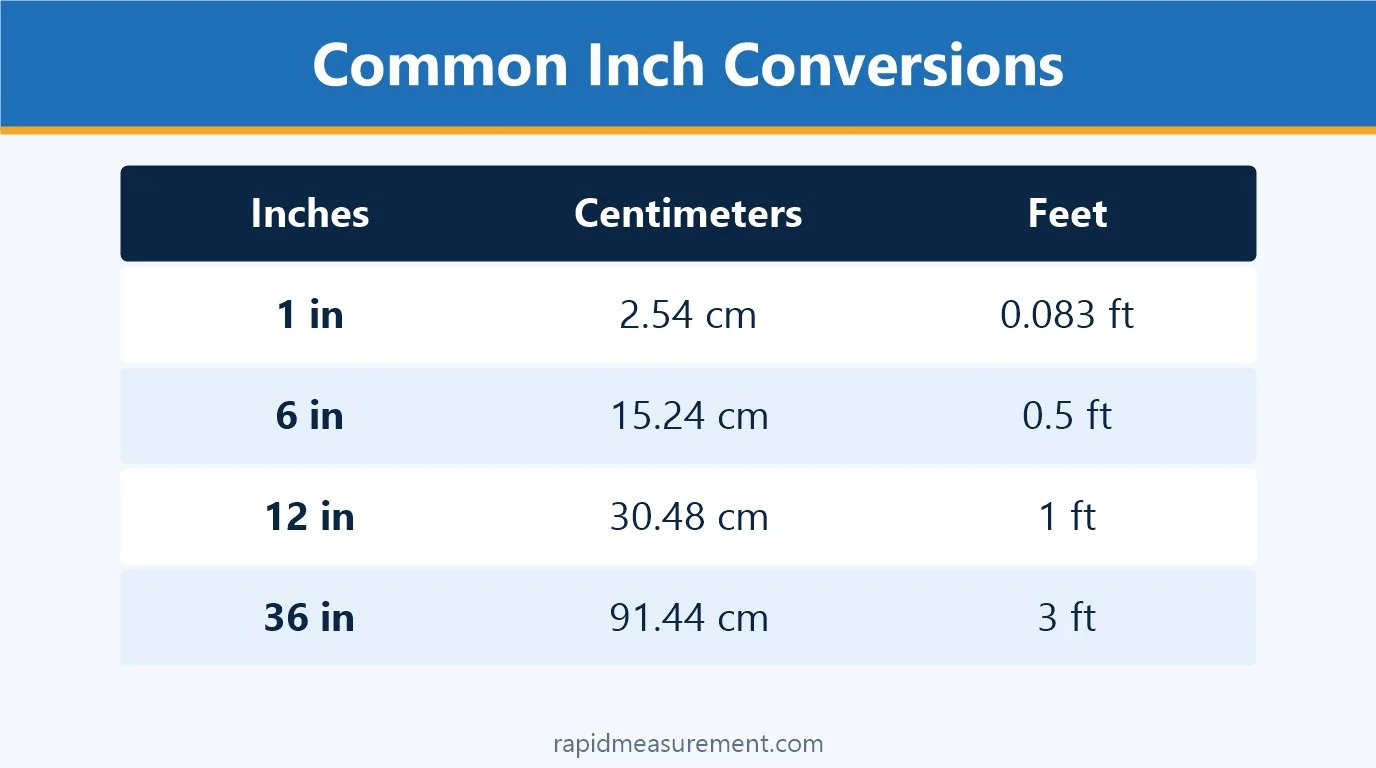
| Inches | Centimeters | Feet |
|---|---|---|
| 1 in | 2.54 cm | 0.083 ft |
| 6 in | 15.24 cm | 0.5 ft |
| 12 in | 30.48 cm | 1 ft |
| 36 in | 91.44 cm | 3 ft |
Inches in Everyday Use
- Screens and displays: TV, monitor, and phone screen sizes are measured diagonally in inches worldwide, even in metric countries.
- Hardware and tools: Screws, bolts, and wrench sizes in the US are specified in fractions of an inch.
- Rainfall and snowfall: US weather reports measure precipitation in inches, unlike most of the world’s millimeters.
- Paper sizes: US letter paper (8.5 × 11 inches) is defined entirely in inches, unlike the metric A4 standard used elsewhere.
Inches and Fractions

Unlike metric units, which divide neatly into tenths, inches are traditionally divided into fractions — halves, quarters, eighths, sixteenths. A tape measure marked “5/8” or “3/16” is using this fractional system, which traces back to the same halving process used in traditional carpentry: a whole inch split in half, then in half again, repeatedly.
Why the US Still Uses Inches
The US never completed a full transition to the metric system, despite the inch’s own definition being metric underneath (exactly 2.54 cm). Existing tools, building codes, and manufacturing standards built around inches made a full switch costly and disruptive, so the country kept inches for daily use even as science, medicine, and much of manufacturing quietly adopted metric units for precision work.
Inches in Specific Fields
Beyond general use, the inch is embedded in the technical standards of several industries:
- Firearms: Barrel lengths are typically specified in inches even in countries that use metric units elsewhere.
- Plumbing: Pipe diameters in the US are standardized in fractions of an inch, a system that has persisted for over a century.
- Printing and typography: The point and pica systems used in publishing are ultimately defined relative to the inch.
- Wheels and tires: Wheel diameters (like “18-inch rims”) are measured in inches worldwide, even in metric countries, because of how deeply embedded the standard became in early automotive manufacturing.
Why Screen Sizes Are Always in Inches
Even manufacturers based in fully metric countries advertise TV, monitor, and phone screens using inches — a global convention that traces back to the early dominance of American electronics manufacturing. Once “32-inch TV” and “6.1-inch phone” became the universal shorthand for screen size, switching to centimeters would have created confusion without any real benefit, so the industry kept the inch even as almost everything else about the products went metric.
How Precisely Can You Measure in Inches?
Standard rulers and tape measures divide the inch into halves, quarters, eighths, sixteenths, and sometimes thirty-seconds — each division representing another halving of the previous one. Woodworking and machining often require accuracy down to a sixty-fourth of an inch or finer, at which point specialized tools like calipers become necessary rather than relying on a standard tape measure.
A Brief History of Inch Standardization
Before 1959, the inch wasn’t perfectly consistent between countries — the US and UK used very slightly different definitions, differing by a few parts per million. This tiny discrepancy mattered enough in precision manufacturing and international trade that the two countries (along with Canada, Australia, South Africa, and New Zealand) signed the International Yard and Pound Agreement, locking the inch to exactly 2.54 cm everywhere. This is the same agreement that standardized the modern foot, yard, and pound.
Frequently Asked Questions
What is an inch?
An inch is a unit of length equal to 2.54 centimeters, or 1/12 of a foot.
How many centimeters are in an inch?
There are exactly 2.54 centimeters in one inch.
How many inches are in a foot?
There are exactly 12 inches in one foot.
Why is an inch exactly 2.54 cm?
Because the US, UK, and other countries agreed by international treaty in 1959 to define the inch this way, permanently tying it to the metric system for consistency.
Is an inch bigger than a centimeter?
Yes. An inch is more than twice as big as a centimeter — about 2.54 times bigger.
Why are US tools often marked in fractions of an inch instead of decimals?
It’s a holdover from traditional carpentry and machining practices, where dividing a measurement in half repeatedly was easier to do by hand than working with decimals — a sixteenth of an inch is simply four halvings of a whole inch.
Was the inch always exactly 2.54 cm?
No. Before 1959, slightly different national definitions existed. The 2.54 cm figure was adopted as a shared international standard to eliminate those tiny discrepancies.
Why do screen sizes stay in inches even in metric countries?
Because the convention became globally standardized early in the electronics industry, and switching now would create confusion without meaningfully improving anything — so manufacturers everywhere kept using inches for this one specific measurement.
What’s the smallest fraction of an inch commonly used?
Standard tape measures typically go down to 1/16 of an inch, while precision tools like machinist calipers can measure to 1/1000 of an inch or finer.
Inches and the Barleycorn: An Odd Historical Footnote
One of the more curious historical definitions of the inch ties it to three barleycorns laid end to end — a unit small and consistent enough to serve as a practical reference before precision manufacturing existed. This barleycorn-based definition persisted in English law for centuries and is part of why UK shoe sizing still uses a related unit (1/3 of an inch) as its sizing increment today, a quiet survival of medieval measurement practice inside a thoroughly modern industry.
How Engineers Handle Inch-Metric Conversion Daily
Global manufacturing rarely stays entirely within one system, so engineers working on international products routinely convert between inches and millimeters as a matter of course. Many technical drawings list both figures side by side — a bolt might be specified as “1/4 in (6.35 mm)” — precisely because the part could be manufactured or assembled in either a metric or imperial-standard facility. This dual-labeling habit is one of the most visible everyday compromises between the two systems.
Related Articles
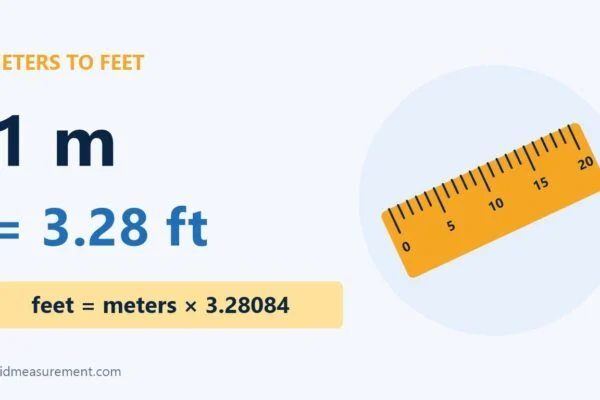
1 Meter to Feet: 1 m = 3.28 ft
1 meter equals 3.28 feet, or 3 ft 3.37 in. See the formula, a meters to feet table, meter vs yard and a quick mental shortcut.
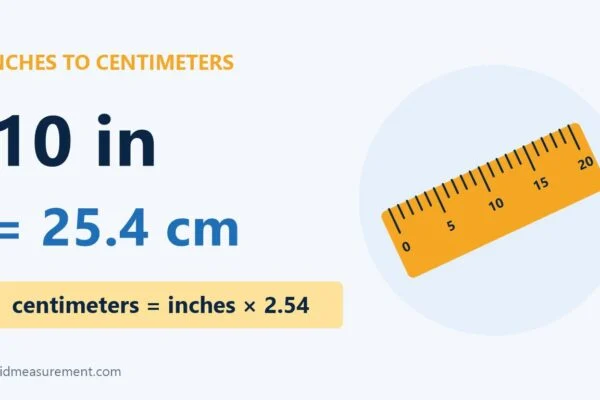
10 Inches to Centimeters: 10 in = 25.4 cm
10 inches equals 25.4 centimeters. Get the formula, a 6-14 inch table, everyday 10 inch objects and a quick mental method.

170 cm to Feet and Inches: 5 ft 6.9 in
170 centimeters equals 5 feet 6.9 inches. See the cm to feet formula, a 160-185 cm height chart and an easy 5-foot anchor trick.
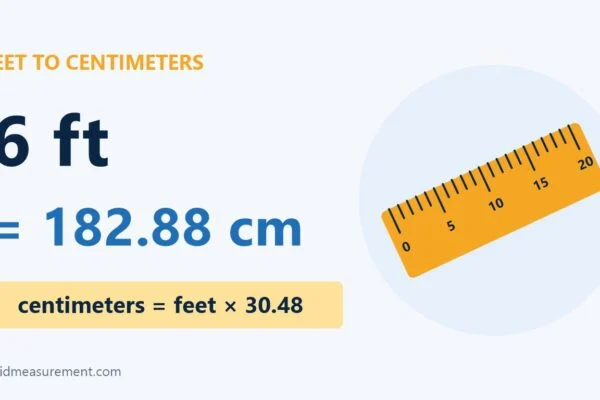
6 Feet to Centimeters: 6 ft = 182.88 cm
6 feet equals 182.88 centimeters. Get the formula, a 6 ft 0 in to 6 ft 5 in height chart in cm and a simple way to convert feet and inches.