Weight & Mass: Common Questions Answered

Weight & Mass: Common Questions Answered
Weight and mass questions come up constantly in cooking, fitness, shipping, and science — often with more nuance than a single conversion chart can capture. This guide rounds up the most common questions people have about weight and mass measurement, in plain language. For a general reference, see the Wikipedia entry on mass and weight.
Is Weight the Same as Mass?
No — though they’re closely related. Mass is the amount of matter in an object and never changes. Weight is the force of gravity acting on that mass, and it changes depending on where you are. On Earth, gravity is roughly constant, so the two get used interchangeably in daily life. Our full mass vs. weight guide covers the science in detail.
What Units Are Used to Measure Weight?

The most common weight and mass units are:
- Kilogram (kg) and gram (g) — the metric units used by most of the world
- Pound (lb) and ounce (oz) — the US customary units
- Metric ton and US ton — used for very large weights like vehicles or cargo
How Do You Convert Between Weight Units?

The key conversion factors to know:
| Conversion | Factor |
|---|---|
| Kilograms to pounds | × 2.20462 |
| Pounds to kilograms | × 0.453592 |
| Grams to ounces | × 0.035274 |
| Ounces to grams | × 28.3495 |
Why Do Different Countries Use Different Weight Units?
It comes down to which measurement system a country historically adopted. Most of the world uses the metric system (kilograms and grams), standardized in the 1790s and adopted globally over the following two centuries. The United States retained the US customary system (pounds and ounces), inherited from British imperial units, largely due to the cost and disruption a full conversion would cause.
Is a Kilogram Heavier Than a Pound?
Yes. A kilogram is about 2.2 times heavier than a pound. See our full 100 kg to pounds guide for the exact math.
How Much Does an Average Object Weigh?
A few quick benchmarks people commonly search for:
- An average adult horse weighs 900-1,200 lb — see our horse weight guide.
- A liter of water weighs almost exactly 1 kg (or about 2.2 lb).
- A newborn baby typically weighs 5.5-8.5 lb (2.5-3.9 kg).
Common Weight Measurement Mistakes
- Confusing weight and mass in casual speech — harmless on Earth, but the distinction matters in physics and space travel.
- Assuming grams and milliliters are always equal — true only for water; see our grams vs. milliliters guide.
- Mixing up fluid ounces and regular ounces — one measures volume, the other measures weight.
Explore Specific Weight Units
For a closer look at any single unit, see our guides to the gram, kilogram, pound, and ounce.
How Is Weight Measured Differently Around the World?
Most of the world settled on the metric system (kilograms and grams) during the 19th and 20th centuries, while the United States remains the most prominent country still using pounds and ounces for everyday weight. Interestingly, even the UK — which gave its name to the “imperial” system — officially uses metric units for most purposes today, though pounds and the informal “stone” (14 lb) still show up in casual conversation about body weight.
Why Precision Matters More in Some Contexts Than Others
The level of precision a weight measurement needs varies enormously by context. A recipe calling for “about a pound of chicken” tolerates a wide margin of error, while a pharmacist calculating a medication dose per kilogram of body weight cannot. This is part of why professional and scientific fields lean so heavily on the metric system — grams and milligrams offer finer, more consistent gradations than trying to subdivide pounds and ounces into smaller and smaller fractions.
Weight Measurement Tools, From Simple to Precise

- Bathroom scales — designed for body weight, typically accurate to the nearest 0.1-0.2 kg or quarter-pound.
- Kitchen scales — accurate to a gram or fraction of an ounce, standard for cooking and baking.
- Laboratory balances — capable of measuring to the milligram or finer, used in pharmacy, chemistry, and precision manufacturing.
- Industrial scales — built for very large weights (tons), used in shipping, agriculture, and construction.
Frequently Asked Questions
Is weight the same as mass?
No. Mass is the amount of matter in an object and never changes. Weight is the force of gravity on that mass, and it changes depending on location.
What is the difference between a kilogram and a pound?
A kilogram is a metric unit equal to about 2.2 pounds — pounds are used mainly in the US, kilograms almost everywhere else.
How many grams are in an ounce?
There are approximately 28.35 grams in one ounce.
Why does the US use pounds instead of kilograms?
The US never completed a full conversion to the metric system, largely due to the cost of replacing infrastructure and habits already built around pounds and ounces.
What is the heaviest commonly used weight unit?
The metric ton (1,000 kg) and the US ton (2,000 lb) are the largest everyday weight units, used for vehicles, shipping containers, and industrial cargo.
Why do some scales show both kg and lb?
Many bathroom and kitchen scales sold internationally include both units so the same device works for customers in metric and imperial-using countries without needing separate product lines.
What is the smallest commonly used weight unit?
The milligram is the smallest weight unit used regularly, primarily in medicine and pharmacy for precise dosing of active ingredients.
Is weight ever measured without gravity?
No — by definition, weight requires gravity to exist. In a gravity-free environment, only mass remains meaningful, which is exactly why astronauts describe themselves as weightless rather than massless in space.
How Weight Measurement Errors Happen
Most everyday weight measurement mistakes fall into a few predictable categories: using the wrong conversion factor from memory, confusing a weight unit with a similarly named volume unit (grams vs. milliliters, ounces vs. fluid ounces), or simply misplacing a decimal point when converting between systems. Being aware of these common failure points is often more useful day to day than memorizing every possible conversion factor, since it helps catch an obviously wrong answer before it causes a real problem.
A Quick Reference for Body Weight Conversions
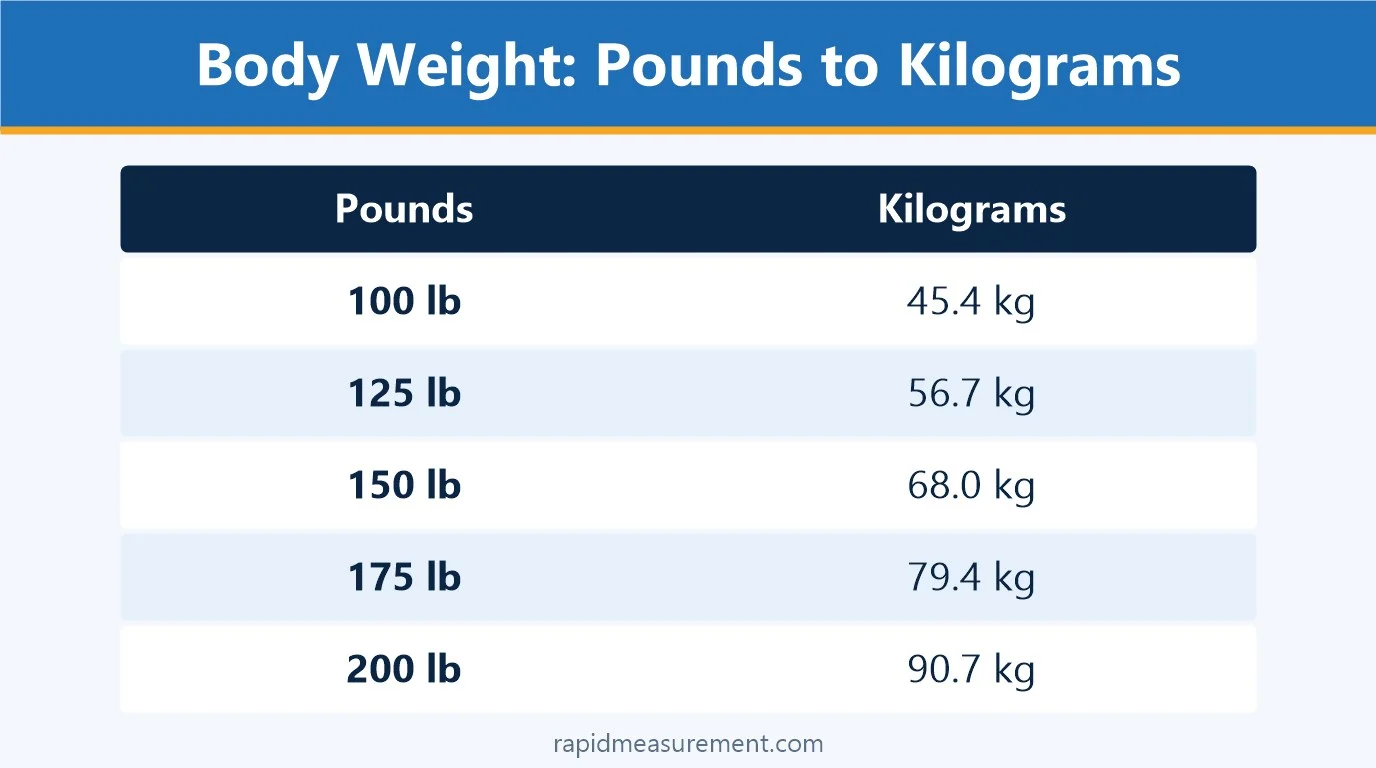
| Pounds | Kilograms |
|---|---|
| 100 lb | 45.4 kg |
| 125 lb | 56.7 kg |
| 150 lb | 68.0 kg |
| 175 lb | 79.4 kg |
| 200 lb | 90.7 kg |
For specific conversions beyond this table, see our dedicated 100 kg to pounds and 45 kg to pounds guides.
Weight Units Across Different Life Stages
The unit people reach for often shifts with what’s being weighed rather than staying fixed: newborns are measured in pounds and ounces (or kilograms and grams) for fine precision, adults in whole pounds or kilograms, and very large quantities — livestock, vehicles, shipping loads — in tons. Recognizing this pattern makes it easier to predict which unit a given context is likely to use, even before checking a label or chart.
Why This Topic Keeps Coming Up in Searches
Weight and mass questions rank among the most consistently searched measurement topics because they intersect with so many everyday decisions — cooking, fitness, shipping costs, medical dosing, and simple curiosity about how much things weigh. Unlike some measurement questions that only come up in specialized professional contexts, weight is something almost everyone encounters and needs to reason about regularly, which is exactly why a clear, centralized reference is worth having.
Related Articles
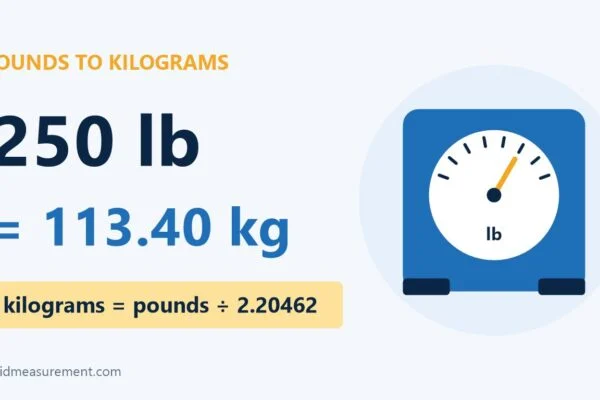
250 Pounds to Kilograms: 250 lb = 113.4 kg
250 pounds equals 113.4 kilograms. See the formula, a 200-300 lb table, chair and gym equipment limits, and a quick way to estimate it.
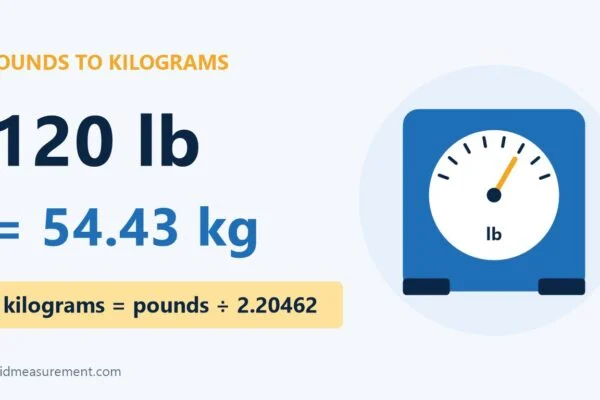
120 Pounds to Kilograms: 120 lb = 54.43 kg
120 pounds equals 54.43 kilograms. Get the lb to kg formula, a 100-140 lb table, body weight and boxing context, and an easy estimate.
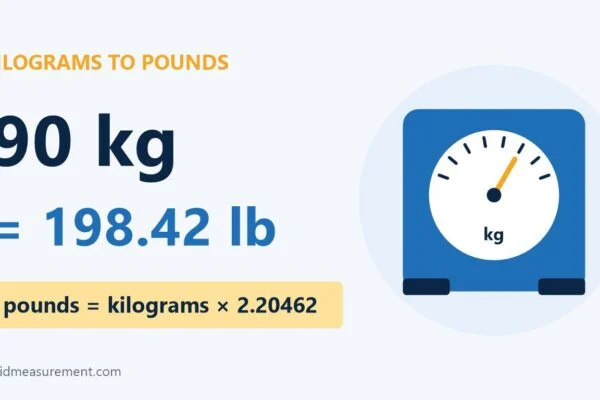
90 Kilograms to Pounds: 90 kg = 198.42 lb
90 kilograms equals 198.42 pounds. See the formula, a 80-100 kg table, how 90 kg compares with 200 lb, and a simple mental shortcut.
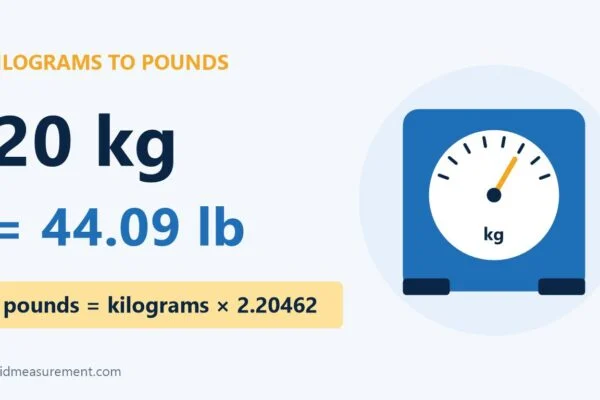
20 Kilograms to Pounds: 20 kg = 44.09 lb
20 kilograms equals 44.09 pounds. Get the formula, a 10-30 kg table, airline baggage tips for a 20 kg limit and a quick mental shortcut.